


Cart
0
-
Most Indian households keep paper napkins in a drawer and bring them out at every meal without thinking too much about it. They are cheap per unit, instantly available, and require zero maintenance. There is no argument against them on the grounds of convenience.
There is, however, a reasonable argument that they are the wrong choice for a home that cares about its table, its budget over time, and the experience of eating in it.
This article makes that argument plainly. Not as a lecture about sustainability, but as a practical case for why cloth napkins serve you better across almost every dimension that matters at a dining table.
They Actually Work Better
Paper napkins are designed to be inexpensive, not effective. A single-ply paper napkin disintegrates under the kind of use that Indian food demands. Curry, dal, anything oil-based, a mango eaten properly: these require a napkin that absorbs rather than smears and holds together rather than shreds into pieces that then need to be picked off the table.
Cotton cloth napkins are genuinely more absorbent than paper. Cotton is a naturally absorbent fibre. A cotton napkin handles a spill, a greasy hand, or an enthusiastically eaten meal without disintegrating mid-use. It does not tear. It does not reduce to a damp wad of pulp in the hand. It works.
This is not a minor point. The napkin's job is to clean and protect. A paper napkin that cannot complete that job without falling apart has failed at its primary function. A good cotton napkin does the job properly, which is the most basic reason to choose it.
They Are Cheaper Over Time
Paper napkins appear cheaper because the price per unit is low. The calculation changes when you add up the purchase over time.
A household of four using three to four paper napkins per person per meal, at two meals a day, uses roughly 25 to 30 paper napkins daily. At even the most modest price for paper napkins in India, that is a recurring monthly cost that compounds over years without providing anything that lasts.
A set of six good cotton napkins costs more upfront. Washed once a week, used daily, that set lasts several years before showing any meaningful wear. The cost per use, calculated over the life of the set, is a fraction of what paper napkins cost over the same period.
The switch to cloth napkins is not an indulgence. It is a straightforward financial decision that happens to produce a better result at the table.
They Change How the Table Looks
A paper napkin on a well-set table is a mismatch. It is not that paper napkins look bad in isolation. It is that they look out of place against a good tablecloth, proper dinnerware, and a table that has been laid with care.
A cloth napkin folded simply at each setting changes the quality of the table setting visibly and immediately. It signals that the meal has been prepared for, that the table has been thought about, and that the people sitting at it are worth the small additional effort.
This effect is disproportionate to the effort involved. Laying six cloth napkins takes thirty seconds more than laying six paper ones. The visual difference is considerably larger than thirty seconds of work would suggest.
For a dinner party, the difference is more pronounced. Paper napkins at a dinner party table that has otherwise been dressed properly is the equivalent of a carefully prepared meal served on disposable plates. The effort in the rest of the setting deserves a napkin that matches it.
They Are Hygienic
The common objection to cloth napkins is hygiene. The argument is that a cloth napkin, used and then washed and used again, carries more bacteria than a fresh paper one.
This argument does not hold up to examination. A cotton napkin washed at 40 degrees in a normal laundry cycle is clean. It is no different from the shirt you wash and wear again, or the towel you use after a shower. The washing cycle removes the bacteria. The napkin is clean.
What is worth observing is that paper napkins are often far less clean than people assume. They are stored in open holders on dining tables, handled by multiple people, and exposed to kitchen environments before use. The appearance of freshness is partly an illusion.
A cloth napkin in a household that washes its linen regularly is clean, reliable, and safe. The hygiene argument for paper napkins is not the strong case it appears to be.
They Are Better for the Table and the Meal
Cotton napkins are soft on the skin in a way that paper is not. Most paper napkins, particularly the cheaper varieties widely available in India, have a roughness to them that is noticeable when used on the face or with children at the table.
Cotton is a gentle fabric. It does not scratch, it does not roughen with repeated use in the way paper does, and for children who use napkins throughout a meal, the difference in comfort is real.
There is also a secondary effect that is rarely discussed: cloth napkins on the table absorb sound in a way paper does not. The clink and clatter of a meal is slightly softened by the presence of fabric at each setting. A table with cloth napkins is a quieter, more settled place to eat.
They Last Long Enough to Become Part of the Table
A paper napkin is used once and discarded. It has no history and no future. A cloth napkin that has been through several hundred meals, washed and folded and laid at the table dozens of times, acquires a quality that is difficult to name but easy to feel.
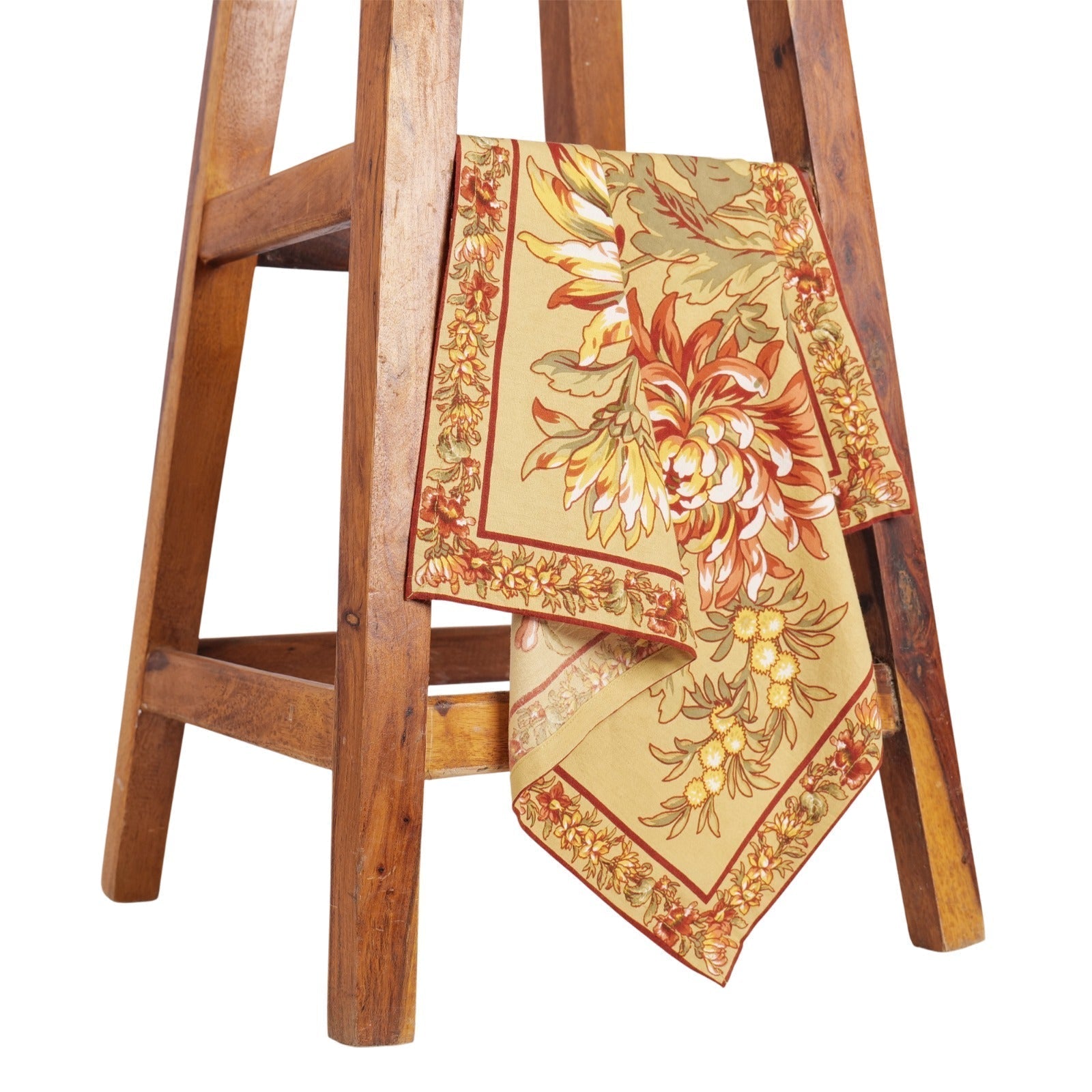
The good napkin set that comes out for every Sunday lunch. The floral cotton napkins that match the tablecloth and have been through every family dinner for three years. These objects accumulate meaning in the way that disposable ones cannot.
This is not sentiment for its own sake. It is the observation that the objects at a table that are used well and cared for over time contribute something to the experience of eating at that table. Paper napkins, by design, cannot do this.
When Paper Napkins Make Sense
The argument for cloth napkins is strong across most situations. There are situations where paper is the more practical choice and worth acknowledging honestly.
Large gatherings where cloth napkin laundry would be impractical. A party of forty guests, an outdoor event, a function away from home: these are situations where the logistics of cloth napkins genuinely outweigh the benefits and paper is the sensible call.
Children's meals where the napkin is likely to travel, be left on the floor, or serve as a colouring surface as much as a napkin. Paper is fine here without apology.
Snacks and casual eating away from the table where a napkin is needed briefly and convenience is the only relevant factor.
In these situations, paper napkins do their job. The case for cloth napkins is specifically at the dining table, for actual meals, in a household context. That is where the comparison matters and where cloth wins clearly.
Making the Switch
The practical barrier to switching is usually inertia rather than conviction. Paper napkins are already in the drawer. Cloth napkins require a purchase and a laundry habit.
The minimum to start: one set of six cotton napkins in a print or colour that works with the tablecloth already in use. Six napkins cover a full table. Washed with the rest of the week's linen, they require no separate laundry effort.
For a household that eats together regularly, six napkins is enough to begin. The experience of using them at a few meals is usually enough to make the switch feel obvious rather than effortful.
The set pays for itself within a few months relative to the paper napkins it replaces. After that, the saving is continuous and the table is better for it.
Frequently Asked Questions
Are cloth napkins more hygienic than paper napkins? Yes, when washed regularly. A cotton cloth napkin washed at 40 degrees in a normal laundry cycle is clean and safe to use. The perceived hygiene advantage of paper napkins, which are often stored in open holders and handled before use, is less significant than it appears. A household that washes its linen weekly will find cloth napkins entirely hygienic.
Are cloth napkins worth the cost? Yes. A set of six good cotton napkins costs more than a pack of paper napkins upfront, but lasts several years with regular use and washing. A household of four using paper napkins for two meals a day spends considerably more on paper napkins over a year than the cost of a cloth napkin set that will last several times that long.
How often should you wash cloth napkins? Wash them with the rest of the household linen, approximately once a week for a household that uses them daily. Spot-treat any stains promptly with cold water and a small amount of washing-up liquid before the napkins go into the wash. Cotton napkins machine wash well at 40 degrees.
Do cloth napkins absorb better than paper? Yes. Cotton is naturally absorbent and handles spills, oil, and food residue more effectively than paper, which disintegrates under sustained use. For Indian food in particular, where oil-based dishes are common, a cotton napkin that holds together through the meal is considerably more practical than a paper one that does not.
How many cloth napkins do I need? Six is the practical minimum for a household that wants to cover a full six-seater table. Twelve gives you the flexibility to set the table twice between washes, which is useful if napkins are used at consecutive meals or for occasions with guests.
Can cloth napkins be used for everyday family meals? Yes, and this is their best use. The everyday family meal is exactly where the difference between cloth and paper napkins is most felt and most worth making. A table set with cloth napkins for an ordinary Tuesday dinner looks and feels more considered than one with paper napkins. The habit of using cloth napkins daily is what converts the initial cost of buying them into a genuine long-term saving.
The paper napkin is a product of convenience, designed to be used once and forgotten. It does its job adequately and asks nothing further. The cloth napkin does its job better, costs less over time, and contributes something to the quality of every meal it is part of.
The case for switching is not complicated. A set of six cotton napkins, kept in the table linen drawer and washed weekly, is one of the most straightforward improvements available to a dining table. It costs less than a good dinner out and pays for itself within a few months.
Shop cotton napkin sets at April Cornell India.