


Cart
0
-
Table linen is the collective term for the fabric elements on a dining table: the tablecloth, the runner, the placemats, and the napkins. Together they protect the table, define the setting, and do more than almost any other element in the room to determine whether a meal feels like an occasion or an afterthought.
In Indian homes, table linen is often treated as either entirely functional, a plastic sheet to catch spills, or entirely ceremonial, the good cloth brought out for guests and otherwise kept in a cupboard. Neither approach makes the most of what table linen can do.
This guide covers every element of table linen in plain terms: what each piece is, what it does, how to choose it, how to care for it, and how the pieces work together. It is written for Indian homes, with Indian table dimensions, Indian food, and the specific way Indian households use the dining table in mind.
What Is Table Linen
Table linen is any fabric placed on the dining table as part of a table setting. The term covers five main pieces:
Tablecloth: A fabric covering that drapes over the full surface of the table and hangs down on all sides. It is the foundation of the table setting.
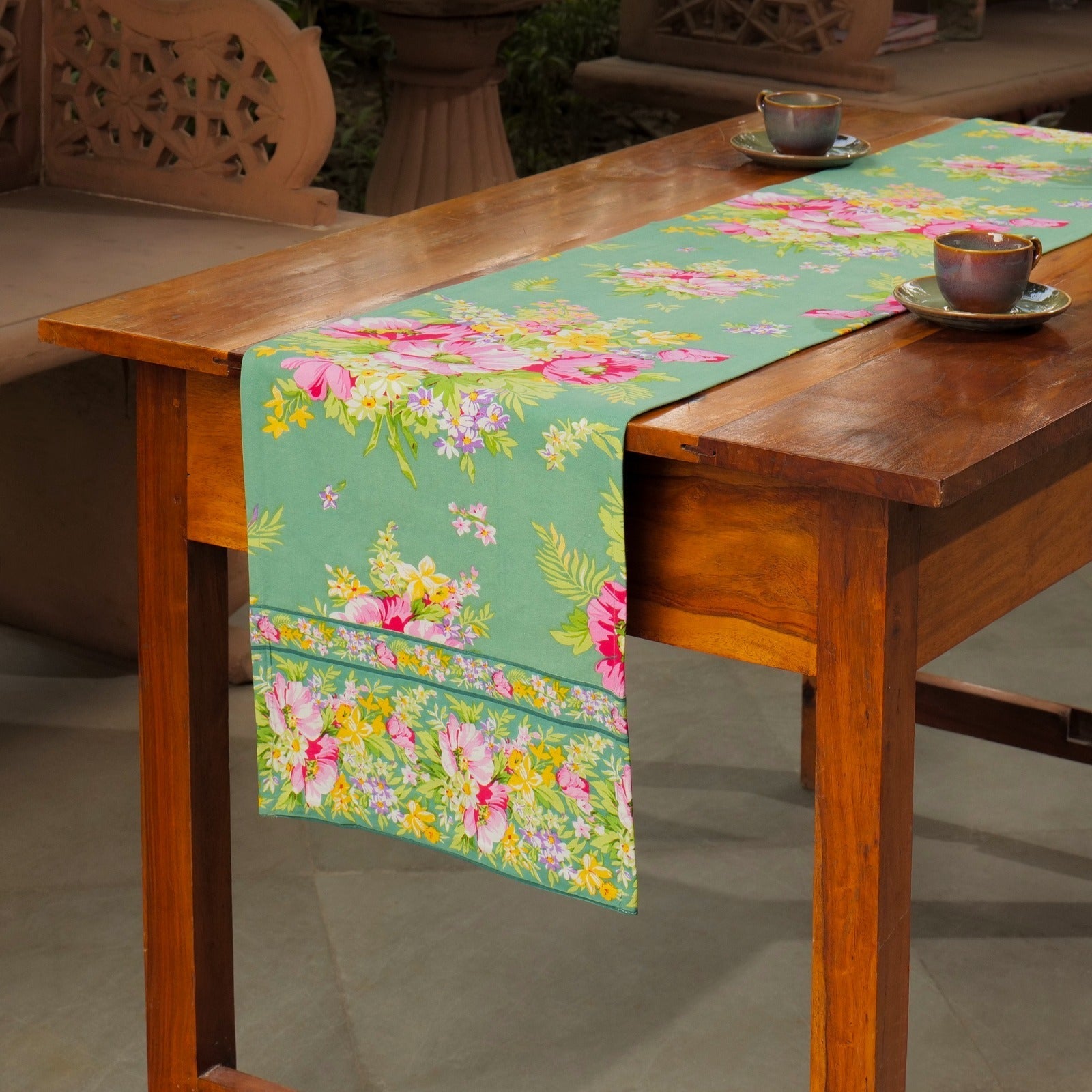
Table runner: A narrow length of fabric laid down the centre of the table, either over a tablecloth or directly on the bare table. It defines the serving zone and adds a layer of colour or texture.
Placemat: A small fabric or hard surface mat placed in front of each diner. It protects the tablecloth and provides each guest with a defined personal space at the table.
Napkin: A square of fabric used by each diner during the meal. It is folded at the place setting before the meal and used to wipe hands and mouth throughout.
Tea towel: Strictly a kitchen item rather than a table linen, but often grouped with napkins. Used for drying hands and dishes in the kitchen.
Each of these pieces can be used independently or layered together. A fully dressed table uses all four. A quick everyday setting might use just a tablecloth and napkins. The choice depends on the occasion, the time available, and the effect wanted.
The Tablecloth
The tablecloth is the most important piece of table linen. Everything else sits on top of it or alongside it. Getting the tablecloth right makes the rest of the table easier to dress.
Size: The tablecloth should overhang the table by 10 to 12 inches on all sides for a standard dressed table. For a more formal look, increase the drop to 15 inches. For everyday use, 8 inches of drop is practical and looks considered without being fussy.
To calculate the right size: measure the length and width of the table and add twice the desired drop to each measurement. A six-seater table at 72 by 36 inches with a 10-inch drop needs a cloth of at least 92 by 56 inches. A round four-seater at 48 inches across with a 10-inch drop needs a round cloth of at least 68 inches in diameter.
Fabric: Cotton is the right starting point for most Indian homes. It is breathable in warm weather, machine washable, durable, and available in the widest range of prints and colours. It improves with repeated washing rather than deteriorating. A jacquard-woven cotton, where the pattern is woven into the fabric rather than printed on top, has additional visual depth and works equally well for casual and formal settings.
Print or plain: A printed tablecloth in a botanical, floral, or paisley pattern brings warmth and character to the table and coordinates naturally with Indian food and wooden furniture. A plain cloth in ivory, white, or a soft neutral gives maximum flexibility and works as a foundation for any other table linen combination on top of it.
Occasions: An everyday cotton tablecloth in a printed mid-tone for daily meals. A plain or jacquard cloth in ivory or a warm neutral for dinner parties. A printed cloth in deep jewel tones or traditional Indian motifs for Diwali, Eid, and other festive occasions.
The Table Runner
A table runner is the most versatile element in a table linen collection. It can be used on its own over a bare table for a light, casual look, or layered over a tablecloth to define the serving zone and add a second layer of colour and texture.
Size: A runner should overhang each end of the table by 12 to 15 inches. Standard runners are 13 to 16 inches wide and available in lengths from 36 inches for a small table to 120 inches for a large one. Measure the length of your table and add 24 to 30 inches for the overhang on both ends to find the right runner length.
Placement: Lay the runner down the exact centre of the table, lengthwise, with equal overhang at both ends. Serving dishes, platters, and centrepiece elements are placed along the runner. For a wide table with multiple shared dishes, two runners crossed at right angles create a useful central grid.
Coordination: When used over a tablecloth, the runner should be in a contrasting but coordinating colour. A deep printed runner over an ivory tablecloth. A plain terracotta runner over a botanical-print cloth. The runner does not need to match the tablecloth: it needs to work with it.
On a bare table: A runner on bare wood gives the table warmth and definition without the full commitment of a tablecloth. This works well for everyday casual use and suits a table with a good surface worth showing.
Placemats
Placemats define each diner's personal space at the table. A table set with placemats looks more considered than one without them, even when the rest of the setting is simple.
Size: Standard fabric placemats for a dining table measure approximately 13 by 17 inches to 14 by 18 inches. Each placemat is placed in front of a chair, about one inch from the edge of the table, centred to the chair.
Fabric vs hard: Fabric placemats, in cotton or a woven textile, absorb condensation from glasses, add warmth and texture to the setting, and coordinate naturally with the tablecloth and napkins. Hard placemats in wood, cork, or plastic offer more robust surface protection but bring a different, more functional aesthetic. For a well-dressed dining table, fabric placemats are the right choice.
How many: Buy in sets that match your table capacity. A six-seater needs six placemats. Buying a placemat and napkin combo set in one purchase ensures the two pieces coordinate without effort.
Coordination: Placemats should coordinate with the tablecloth without matching it exactly. A complementary colour from the tablecloth's palette, or a different scale of the same print, reads as intentional. Six identical placemats from a single set look more considered than six different ones bought separately.
Cloth Napkins
Cloth napkins are the most overlooked piece of table linen and the one with the most disproportionate effect on the quality of a table setting.
A cloth napkin against a good tablecloth looks correct in a way a paper napkin never does. It feels better in the hand, absorbs properly during a meal, and holds a fold that gives each place setting a finished quality.
Size: A standard dinner napkin measures 18 by 18 inches to 20 by 20 inches when unfolded. This is large enough to use properly across the lap during a meal and to fold into any of the standard presentations.
How many: Six is the practical minimum for a six-seater household. Twelve gives you enough to set the table twice between washes, which matters if the napkins are in use at consecutive meals or guest occasions.
Folding: Three folds cover every occasion. The standing fold: rectangle folded into thirds lengthwise, stood upright on the plate. The diagonal tuck: folded into a triangle, half-tucked under the side plate with the point facing the guest. The loose roll: rolled without pressing the folds flat, laid across the plate or through a napkin ring. Any of these, done consistently, finishes a place setting.
Care: Cotton napkins machine wash at 40 degrees. Air dry or tumble dry low. Iron while slightly damp. A well-maintained set of cotton napkins lasts years.
Fabric: What to Know
The fabric of table linen affects its look, feel, durability, and the care it requires. For Indian homes, the practical choice is almost always cotton, but the differences between types are worth understanding.
Cotton: The most practical fabric for table linen in India. It is breathable in warm weather, absorbent, machine washable, and widely available in a range of weights, weaves, and prints. It softens and improves with washing. The right choice for everyday use.
Jacquard cotton: Cotton in which the pattern is woven into the fabric rather than printed on the surface. This produces a cloth with a richer, more textured appearance. It reads as more formal than a flat-woven printed cotton but is maintained in the same way. Suitable for both everyday and formal use.
Linen: A natural fibre with a slightly finer drape than cotton and a distinctive textured appearance. It gets softer with repeated washing. Linen requires more care than cotton as it wrinkles readily and benefits from ironing while damp. Well suited to formal or special occasion settings. Generally more expensive than cotton.
Polyester: Stain-resistant, wrinkle-resistant, and very easy to maintain. The practical advantages are real. The aesthetic disadvantage is also real: polyester lacks the warmth and quality of hand that natural fabrics have. Not the right choice for a table that is meant to look well dressed.
Cotton-linen blends: Combine the softness and washability of cotton with the drape and texture of linen. A practical middle ground for homes that want the look of linen without the full maintenance requirement.
How to Build a Table Linen Collection
The approach that works best for most Indian homes is to build a small collection of well-chosen pieces rather than accumulate a large number of mediocre ones.
A practical starting point:
One everyday tablecloth in a printed cotton mid-tone. Used for daily family meals. Washed regularly. Replaced every few years as needed.
One formal tablecloth in plain ivory or a jacquard-woven neutral. Used for dinner parties and occasions where a plain base suits the setting. Stored flat between uses.
One festive tablecloth in a rich printed colourway, deep jewel tones, traditional Indian motifs, or a warm floral. Used for Diwali, Eid, family celebrations, and any occasion that calls for the table to feel dressed for the evening.
One or two table runners in colours that coordinate with both the everyday and festive cloths. Used to define the centre of the table and adapt the look of the setting.
One set of six placemats and napkins. Ideally purchased as a combo set so the two pieces coordinate without effort. Used at every meal, washed regularly.
This gives you, with six to eight pieces, a table that can be dressed appropriately for every situation from a Tuesday dinner to Diwali.
Caring for Table Linen
Washing: Cotton table linen machine washes at 40 degrees with a mild detergent. Wash tablecloths separately from other laundry to avoid colour transfer and to prevent smaller items from bunching inside a large cloth.
Drying: Air dry where possible. Tumble dry on a low setting if needed. Avoid high heat, which weakens cotton fibres over time.
Ironing: Iron while slightly damp for the best result. A flat iron on a cotton setting removes creases cleanly. Fold the tablecloth along its natural fold lines once ironed and store flat or loosely rolled, not tightly folded, to prevent permanent crease marks.
Stains: Treat stains as soon as possible. Cold water and a small amount of washing-up liquid before washing handles most food and drink stains. Avoid hot water on fresh stains as it sets them. For stubborn marks, a soaking period before washing usually resolves them.
Storage: Store tablecloths clean and dry. Damp storage causes mildew, which is difficult to remove from cotton fabric. A linen cupboard with some air circulation is better than a sealed storage bag for long-term storage.
Frequently Asked Questions
What is table linen? Table linen is the collective term for the fabric elements used to dress a dining table: the tablecloth, table runner, placemats, and napkins. Together they protect the table surface, define each diner's place, and set the visual tone of the meal.
What is the difference between a tablecloth and a table runner? A tablecloth covers the full surface of the table and hangs down on all sides. A table runner is a narrow length of fabric laid down the centre of the table. The runner can be used alone on a bare table for a casual look, or layered over a tablecloth to define the serving zone and add a second layer of colour and texture.
Do I need both a tablecloth and a runner? No, but using both produces a more layered, composed table setting. If you only use one, a tablecloth on its own provides full coverage and a complete base for the setting. A runner on its own over bare wood works well for casual everyday use. For a dinner party or festive occasion, both together gives the table more visual depth.
What is the best table linen for an Indian home? Cotton table linen in printed or jacquard-woven patterns is the most practical and versatile choice for Indian homes. It is breathable in warm weather, machine washable, durable, and available in a wide range of prints that coordinate naturally with Indian food and home aesthetics. A floral or botanical print tablecloth in a warm mid-tone palette works well for daily use.
How do I choose a placemat and napkin set? Buy them together as a combo set in a print and colour that coordinates with your tablecloth rather than matching it exactly. A complementary colour pulled from the tablecloth's palette, or a different scale of the same print, reads as intentional. Buying the two as a set removes the coordination problem entirely.
How do I care for cotton table linen? Machine wash at 40 degrees with mild detergent. Air dry or tumble dry on low. Iron while slightly damp. Treat stains with cold water and washing-up liquid as soon as they occur. Store clean and dry, folded along natural fold lines or loosely rolled, in a well-ventilated space.
How many napkins do I need? A minimum of six for a six-seater table. Twelve gives practical flexibility for consecutive meals or guest occasions. Cotton napkins in a set of six, bought as part of a placemat and napkin combo, cover most everyday needs.
The dining table is used more than almost any other surface in the home. Table linen that is well chosen, used freely, washed properly, and stored with some care will last years and repay the investment at every meal.
The starting point is simpler than most people assume. One tablecloth, one set of napkins, and a runner. Laid on the table before a meal. That is enough to make the table feel like it was prepared for the people sitting at it.
Shop tablecloths, table runners, placemat and napkin sets at April Cornell India.