


Cart
0
-
The question comes up every time someone buys their first piece of proper table linen: do I need a tablecloth, a runner, or both? The answer depends on the table, the occasion, and what you actually want the table to do. This guide works through each scenario clearly, so the decision makes sense rather than remaining a matter of vague preference.
What Each One Actually Does
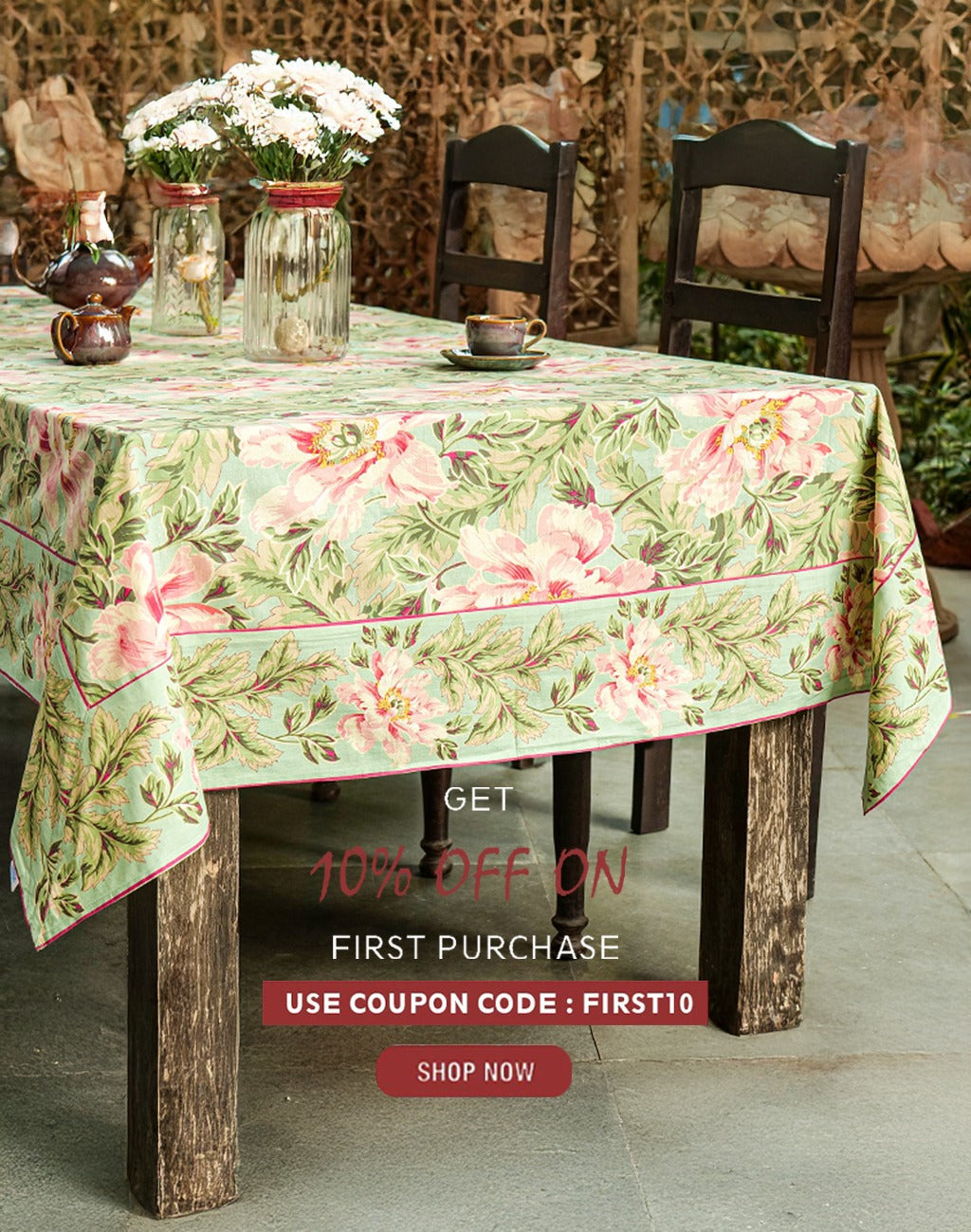
A tablecloth covers the full surface of the table. It drapes down on all sides, protects the table from spills and heat, and provides the visual foundation for everything placed on top of it. It hides the table entirely: scratches, marks, an unremarkable surface, all of it disappears under a good tablecloth.
A table runner covers only the centre strip of the table. It runs lengthwise down the middle, overhanging at both ends, and leaves the sides of the table visible. It defines the serving zone, adds colour and texture to the centre, and allows the rest of the table surface to be seen.
Neither is better than the other in absolute terms. They solve different problems and work in different situations.
When a Tablecloth Is the Right Choice
When the table needs to be protected fully. A tablecloth covers every part of the surface. If you have children at the table, if you are serving multiple courses, or if meals tend to be extended and involve a lot of dishes being moved around, full coverage is the more practical solution. A runner protects only the centre strip. The rest of the table remains exposed.
When the table itself is not worth showing. A runner draws attention to the table surface it sits on. If that surface is a beautiful piece of wood or a clean glass top, that is a feature. If the table is old, marked, or simply unremarkable, a tablecloth is the better choice. It replaces the table surface visually rather than framing it.
For formal occasions. A dinner party, a festive meal, a celebration with guests: these occasions call for a tablecloth. The tablecloth signals that the table has been prepared for the evening. A runner alone, however beautiful, reads as more casual than a full cloth. For occasions where the formality of the setting matters, the tablecloth earns its place.
When the room or the dinnerware is plain. If the table, the chairs, the walls, and the dinnerware are all in neutral tones, a tablecloth in a good print or a warm colour brings the decorative work that nothing else in the setting is providing. A runner does not have enough surface area to do the same job.
When a Runner Is the Right Choice
When the table itself is worth showing. A good wooden table, a glass-top table, a marble surface: these deserve to be seen. A runner down the centre adds warmth and texture without obscuring the material or the finish of the table. This is perhaps the runner's most convincing use case. It enhances rather than replaces.
For everyday casual meals. A runner on a bare table is a quicker and lower-maintenance option than a full tablecloth for daily use. It defines the centre of the table and gives serving dishes a home without requiring the table to be fully dressed every meal. For households where the dining table is used multiple times a day, a runner that stays in place and requires washing only once a week is a practical and aesthetically considered choice.
When you want flexibility. Runners are easier to change than tablecloths. A tablecloth requires the entire table to be undressed to change the look. Swapping a runner takes thirty seconds. This makes runners the better option for households that like to change the table's look seasonally, for different occasions, or simply because a different colourway suits the mood.
When the tablecloth is plain and needs something above it. A plain ivory or white tablecloth is clean and versatile but visually inert on its own. A runner in a printed or textured fabric over it adds the character and warmth that the plain cloth cannot provide. In this case the runner is not an alternative to the tablecloth but the element that completes it.
When Both Together Is the Right Choice
Layering a runner over a tablecloth is not redundant. It is the most composed option and the one that produces the most visual depth.
The tablecloth provides the full base and covers the table completely. The runner sits on top of it, down the centre, defining the serving zone and adding a second layer of colour and texture. The result is a table that looks considered from every angle: the sides of the cloth draping cleanly, the centre dressed and defined, the overall setting reading as intentional.
For a dinner party or festive occasion, both together is almost always the right answer. The tablecloth handles the formality and protection. The runner adds the visual interest and defines the centre without requiring the tablecloth to do all the decorative work.
The rule when layering is that the runner should be shorter than the tablecloth so it sits within it rather than extending past it. A runner that hangs past the edges of the tablecloth looks as if something has gone wrong rather than as if a choice has been made.
The Coordination Question
When using both, the two pieces need to work together without competing.
The most reliable approach is contrast within the same palette. A plain or neutral tablecloth with a printed or textured runner. A printed tablecloth with a plain runner in a colour pulled from the print. Both approaches produce a layered look that has depth without visual confusion.
What does not work is two equally bold prints at the same scale from unrelated palettes. A large floral tablecloth with an unrelated geometric runner does not create interest: it creates noise. The two pieces fight each other and neither one wins.
The runner should complement the tablecloth, not compete with it. One of the two leads. The other supports.
The Indian Home Context
In most Indian homes, the choice has historically been between a plastic table cover and nothing at all. Both are functional. Neither makes the table a place worth sitting at.
A printed cotton tablecloth, used daily and washed weekly, changes that immediately. It costs a fraction of any other change you could make to the dining room and has a more visible effect than almost anything else.
For households with a beautiful wooden table that they have invested in, a runner is the right starting point. It respects the table, enhances it, and keeps the surface visible and appreciated.
For households with a glass-top table, which is common in Indian apartments, both a tablecloth and a runner together work well. The tablecloth sits under the glass for full coverage, or a runner goes directly on the glass surface for a cleaner, lighter look. Either approach is correct depending on preference.
For festive occasions on any table in any home, a tablecloth in a rich print with a coordinating runner over it is the version of the table that the occasion deserves.
A Simple Decision Framework
The table surface is beautiful and worth showing: Runner on bare table.
The table surface is unremarkable or needs protection: Tablecloth.
Everyday casual meals, quick setup: Runner on bare table or runner over a tablecloth already in place.
Dinner party or guests arriving: Tablecloth. Runner over it for depth.
Festive occasion, Diwali, Eid, a family celebration: Tablecloth in a rich print. Runner in a complementary colourway over it.
Limited time, easy maintenance as the priority: Runner. Washes and stores more easily than a full tablecloth.
One purchase to start: A tablecloth. It does more, covers more, and forms the base that everything else builds on.
Frequently Asked Questions
Do I need both a tablecloth and a table runner? No. Both together produces the most layered and composed result, but either one alone is entirely correct. A tablecloth on its own gives full coverage and formality. A runner on its own gives warmth and definition to the centre while keeping the table surface visible. The choice depends on the table, the occasion, and the look you want.
Can you use a table runner without a tablecloth? Yes. A runner on a bare table is one of the most common and most effective ways to use one. It works particularly well on a beautiful wooden or glass-top table where showing the surface is desirable. It gives the table warmth and a defined serving zone without covering the table entirely.
Is a table runner enough for a dinner party? For a casual dinner party, a runner on a good table is sufficient. For a more formal dinner party where the setting is expected to signal care and occasion, a tablecloth provides more formality and coverage. Combining both is the most considered option for a formal dinner.
Should the table runner be longer than the tablecloth? No. When layered over a tablecloth, the runner should be shorter than the tablecloth so it sits within it. A runner that extends past the edge of the tablecloth looks as if it has been placed incorrectly. On a bare table, the runner overhangs at both ends by 12 to 15 inches, which is the standard drop for a runner used alone.
What is the difference between a table runner and a tablecloth? A tablecloth covers the entire table surface and drapes down on all sides. A table runner is a narrow length of fabric that runs down the centre of the table, leaving the sides of the table visible. A tablecloth provides full coverage and a formal base. A runner adds colour and texture to the centre zone and works either on a bare table or layered over a tablecloth.
Which is easier to maintain, a tablecloth or a table runner? A runner is easier to maintain. It is smaller, washes more quickly, dries faster, and takes less storage space than a full tablecloth. For everyday use in a busy household, a runner requires less effort to keep in good condition than a tablecloth. A tablecloth used daily will need washing more frequently simply because it covers more surface area and absorbs more of what happens during a meal.
Neither a tablecloth nor a runner is the obviously correct answer for every table in every home. What is clear is that a table with one or both is a better table than one with neither.
Start with whichever solves the most pressing problem your table currently has. If the table needs to be covered, a tablecloth. If the table deserves to be seen, a runner. If the occasion demands both, both.
Shop tablecloths and table runners at April Cornell India.