


Cart
0
-
-
It is one of the most common questions when buying a tablecloth, and also one of the most under-answered: printed or plain?
The usual response is that it depends on your taste, which is true but not particularly useful. Taste is not the only variable. The table you own, the room it sits in, the food you cook, the occasions you dress for, and the other textiles already in your home all have something to say about which choice will actually work.
This guide works through those variables honestly, so the decision becomes straightforward rather than a matter of indefinite deliberation in front of a website.
What a Plain Tablecloth Does Well
A plain tablecloth in a neutral colour, white, ivory, ecru, sage, or soft grey, is the most versatile base a dining table can have. It coordinates with virtually any dinnerware, any centrepiece, and any napkin colour. It reads as formal enough for a dinner party and quiet enough for a Tuesday evening.
The specific strengths of a plain cloth:
It lets everything else on the table lead. If you own striking dinnerware, a dramatic centrepiece, or napkins in a colour you love, a plain tablecloth steps back and lets those elements do the work. A printed cloth competes. A plain one defers.
It works across seasons without adjustment. A white or ivory tablecloth in January looks the same as it does in July. You are not making a seasonal commitment when you buy it.
It photographs cleanly. For anyone who sets a table for a gathering and wants it to look good in pictures, a plain cloth is considerably more forgiving than a printed one. The pattern in a printed cloth can fight with the food and the dinnerware in a photograph in ways it does not in person.
It is the right choice for formal occasions. A dinner party, a family celebration, a festive meal: a white or ivory cotton cloth with good napkins is the established template for a reason. It has a quality of restraint that signals the occasion is being taken seriously.
The weakness of a plain cloth is that it requires the rest of the table to carry the visual interest. If the dinnerware is plain, the centrepiece is minimal, and the napkins are unfolded, a plain tablecloth produces a table that looks bare rather than considered. It depends on other elements to give the setting character.
What a Printed Tablecloth Does Well
A printed tablecloth brings the decorative work to the table itself. The visual interest is already there before a single plate is laid.
It transforms a bare table instantly. On a wooden table that has nothing else going for it aesthetically, a good printed cotton tablecloth changes the character of the room in the time it takes to spread it. No other changes required.
It works harder on an everyday table. For a table that is used daily for family meals, a printed cloth gives the table a sense of occasion without requiring any particular effort. The table is already dressed. You are just eating at it.
It coordinates naturally with Indian food. The colours and warmth of Indian cooking, the turmeric golds, the deep reds, the greens of fresh coriander, sit naturally against a printed cotton cloth. A white cloth can make the same meal look clinical. A botanical or floral print in warm or earthy tones makes the food look generous.
It disguises everyday wear better. A plain white cloth shows every mark it accumulates. A printed cloth in mid-tones absorbs the evidence of regular use with considerably more grace. This is not about lowering standards. It is about choosing a cloth that can be used without anxiety.
It carries a mood. A paisley print in deep ocean blue sets a different table from a floral print in soft coral. A printed cloth chooses an aesthetic for the table and commits to it. For homes with a clear visual identity, this is a strength rather than a constraint.
The weakness of a printed cloth is that it requires more care in coordination. A printed tablecloth with a heavily patterned runner, mixed-print placemats, and napkins in a contrasting pattern becomes visually exhausting. The print needs room to work. The other elements on the table need to give it that room.
The Coordination Question
The single most common mistake with printed tablecloths is piling too many patterns on top of each other. The tablecloth is the base of the table. If it is printed, the layers above it should be quieter.
A printed tablecloth works well with:
-
A plain runner in a colour pulled from the tablecloth's palette
-
Solid-coloured placemats in one of the tones in the print
-
Napkins in a plain colour or a very subtle complementary print at a smaller scale
A printed tablecloth does not work well with:
-
A runner in a completely different and unrelated print
-
Placemats in colours that do not appear anywhere in the tablecloth
-
Napkins in a bold contrasting pattern of their own
The principle is that one layer of pattern carries the table. Additional layers either support it quietly or compete with it loudly. The first produces a table that looks composed. The second produces one that looks confused.
The Jacquard Option
Between printed and plain sits the jacquard tablecloth, which is worth understanding separately because it behaves differently from both.
A jacquard cloth has its pattern woven into the fabric rather than printed on top of it. The result is a cloth with visual texture and depth that reads as more formal than a printed cloth but warmer than a plain one. In direct light the pattern is visible. In lower light it recedes and the cloth reads almost as a solid.
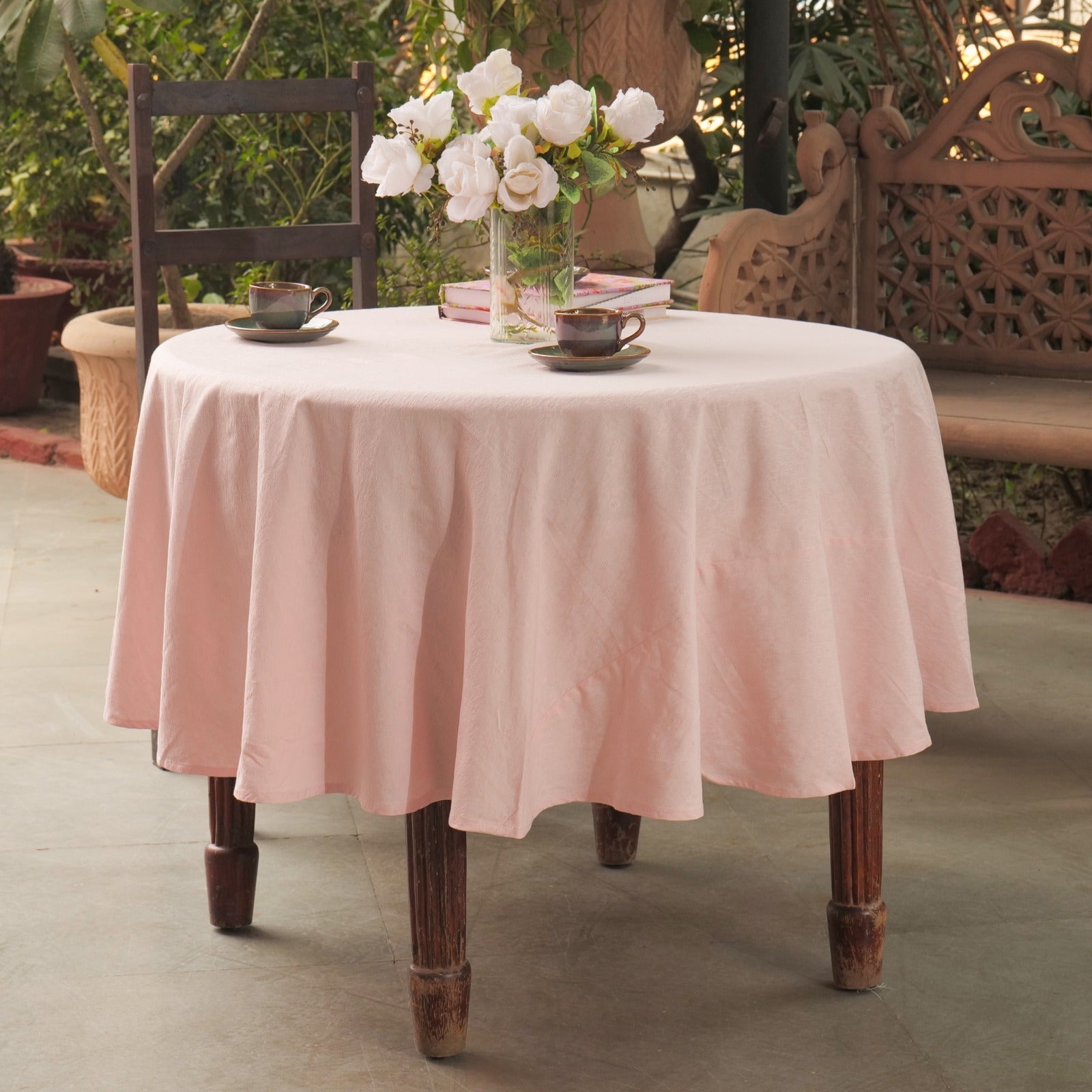
Jacquard tablecloths in soft neutral tones, ivory, pale pink, sage green, or muted gold, are the most versatile tablecloths available. They carry the refinement of a plain cloth with enough visual interest to stand without elaborate decoration on top.
For homes that want one tablecloth that works for both everyday meals and formal occasions, a jacquard cloth in ivory or a soft neutral is often the right answer. It asks less of the rest of the table than a printed cloth does, and it brings more to the table than a flat plain cloth does.
Which One Is Right for Your Home
The following is a practical framework rather than a definitive answer, because the definitive answer depends on the specific home.
Choose a printed tablecloth if:
-
Your dining room or kitchen has plain walls and simple furniture and needs a visual focal point
-
You use the dining table daily and want the table to feel dressed without effort
-
Your dinnerware is simple and plain and needs something to set it against
-
You have a clear aesthetic for the room and want the tablecloth to express it
Choose a plain tablecloth if:
-
You own dinnerware or a centrepiece with strong visual presence and want the cloth to support rather than compete
-
You entertain formally and want a cloth that works for the full range of occasions
-
You want the flexibility to change the look of the table by changing only the napkins or runner
-
Your home has a minimal or contemporary aesthetic where a strong print would feel out of place
Choose a jacquard tablecloth if:
-
A Note on Colour
For printed tablecloths in Indian homes, mid-tone and warm palettes work better than pale pastels or very dark colours for everyday use.
Pale pastels show marks quickly and require frequent washing. Very dark colours can make the table feel heavy, particularly in rooms without strong natural light. Mid-tones in botanical greens, terracotta, oceanic blues, warm golds, and soft florals tolerate daily use well, coordinate naturally with the colours of Indian food and wooden furniture, and retain their character wash after wash.
For plain tablecloths, ivory and warm white are more practical than pure white for daily use. Pure white shows everything. Ivory and off-white absorb the warmth of the room and hide the evidence of regular meals without looking deliberately stained.
Frequently Asked Questions
Should I choose a printed or plain tablecloth for everyday use? For everyday use, a printed cotton tablecloth in a mid-tone botanical or floral print is usually the more practical choice. It brings visual warmth to the table without requiring other decorative elements to fill the space, and it tolerates daily use better than a plain white cloth, which shows marks more readily.
Can you use a printed tablecloth with patterned napkins? Yes, with care. The rule is that one dominant pattern carries the table. If the tablecloth is boldly printed, the napkins should be in a plain or very subtly printed fabric in a colour drawn from the tablecloth's palette. If the napkins are printed, a plain or jacquard tablecloth gives them room to work. Two equally bold patterns at the same level of the table compete rather than coordinate.
What is a jacquard tablecloth? A jacquard tablecloth has its pattern woven into the fabric rather than printed on the surface. The weave creates texture and depth in the cloth itself. Jacquard tablecloths in neutral tones are considered one of the most versatile options because they carry visual interest without the boldness of a printed cloth, and they work equally well for casual and formal settings.
What colour tablecloth is best for an Indian home? Warm mid-tones work well in most Indian home settings. Botanical prints in terracotta, sage green, and soft coral coordinate naturally with wooden furniture and Indian food. For plain tablecloths, ivory and warm white are more practical than pure white for everyday use. For formal occasions, white or ivory in cotton or jacquard is the standard choice.
How do I choose a tablecloth that works for both everyday and special occasions? A jacquard tablecloth in ivory or a soft neutral colour is the most versatile option across both contexts. For a printed cloth that can carry both, choose a floral or botanical print in a relatively restrained palette that reads as warm and considered without being casual. Avoid very loud or trend-dependent prints if the intention is long-term use across multiple occasions.
Is cotton or linen better for a tablecloth? Both are good choices. Cotton is easier to maintain, more widely available in printed patterns, and holds colour well through repeated washing. Linen has a slightly finer drape, gets softer with use, and has a more textured, relaxed quality that suits casual settings particularly well. For everyday use in an Indian home, cotton is the more practical starting point.
The printed versus plain question does not have a universal answer, but it does have a logical one once the variables are clear. Most homes have room for both over time: a printed cotton cloth for daily use and occasions that call for warmth, and a plain or jacquard cloth for more formal settings. Starting with whichever serves the table most of the time is the practical approach.
The tablecloth that gets used is always better than the one kept for a special occasion that never quite arrives.
Shop printed and jacquard tablecloths at April Cornell India.
-