


Cart
0
-
There is a specific quality to a hotel bed that is difficult to describe precisely but immediately recognisable. It is not simply that the bed is made. It is that the bed looks composed: every layer in its right place, the pillows full and upright, the cover smooth, the whole thing giving the impression that someone thought about it.
Most people assume this requires expensive linen, a housekeeping team, or some professional technique that does not translate to a home bedroom. None of these assumptions are quite right. What hotels do is systematic rather than magical, and the system is straightforward enough to apply at home.
These seven tips cover the system.
1. Start With a Fitted Sheet That Actually Fits
Hotel beds look smooth because the bottom layer is smooth. A fitted sheet that is slightly too large bunches and wrinkles. One that fits the mattress dimensions correctly stays flat.
Check the depth of the mattress against the fitted sheet specifications before buying. Indian mattress depths vary considerably, particularly with memory foam and pillow-top mattresses. A sheet designed for a 20cm mattress will not sit properly on a 30cm one.
This is the least glamorous tip and the one with the most immediate effect. Everything else sits on top of this layer. If it is not smooth, nothing above it will look right.
2. Choose a Bed Cover With Enough Weight
Hotels use bed covers with enough weight that they drape rather than float. A lightweight synthetic cover tends to sit on the surface of the pillows and mattress rather than settling around them, which is why it looks thin regardless of how neatly it is laid.
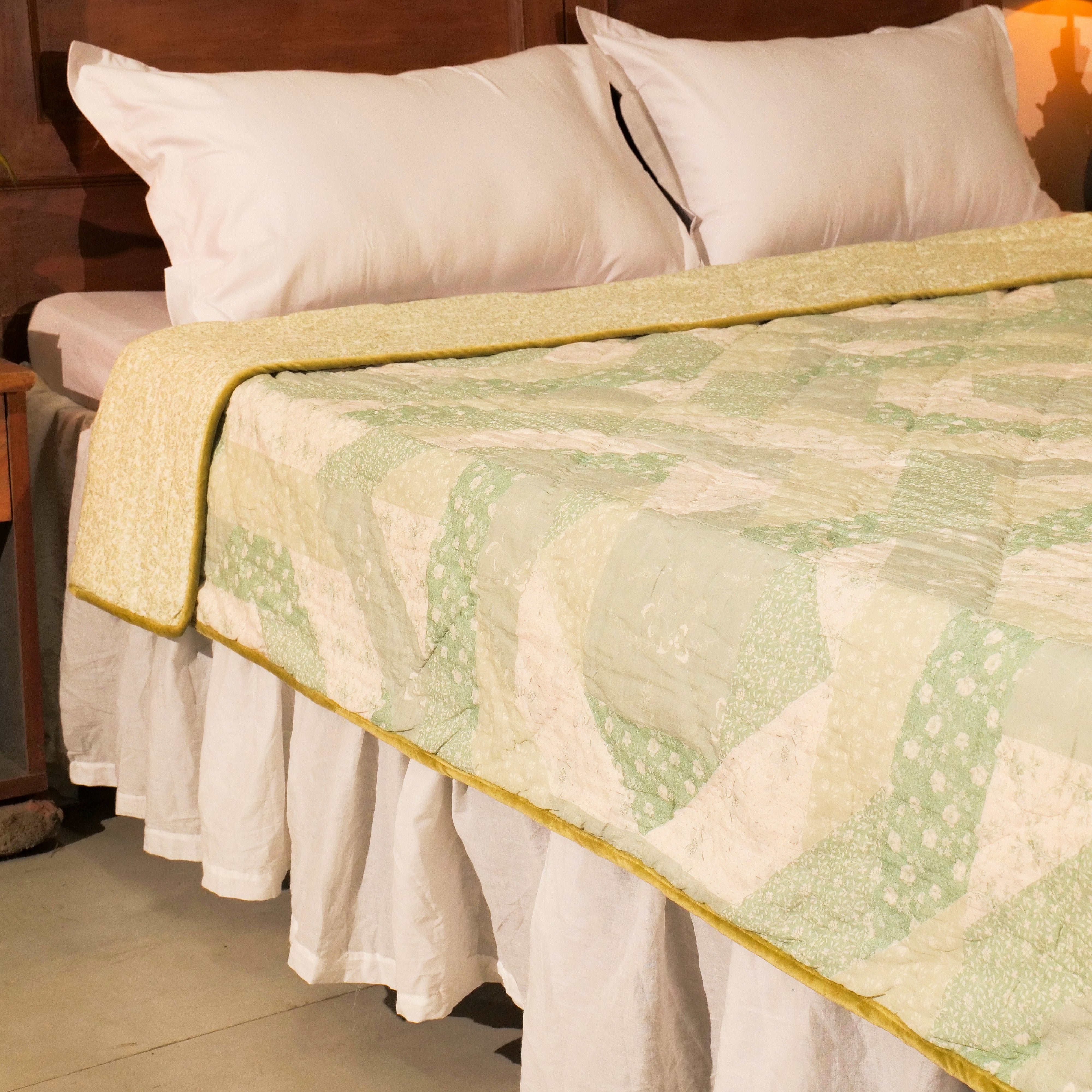
A cotton bed cover with some body to it, a quilted cotton or a woven jacquard, drapes over the edges of the mattress and holds its shape around the pillows. The weight does the visual work. A printed cotton bed cover in a botanical or floral print adds warmth and character to the room beyond the structural benefits.
3. Layer the Bed in Order
Hotels make beds in a specific sequence. The sequence matters because each layer frames the next.
Fitted sheet flat and tucked. A flat sheet or light layer on top. Bed cover over that, folded back at the top to show approximately 30cm of the layer beneath. Pillows stacked at the head. Decorative cushions in front of the pillows.
The fold-back at the top is what gives a hotel bed its characteristic look: the layering is visible rather than hidden. One clean fold of the bed cover showing the layer beneath it signals that the bed has been made with attention. It takes ten seconds.
4. Use More Pillows Than You Sleep On
Most people sleep on two pillows and make the bed with those same two. Hotel beds use additional pillows, typically two or three behind the sleeping pillows, that create height and depth at the head of the bed.
The additional pillows do not need to match the sleeping ones. They need to be full and upright. A flat pillow leaning against the headboard looks deflated. A firm, well-filled pillow standing upright gives the bed a generous, composed quality.
Two sleeping pillows in front, two or three additional ones behind. In an Indian bedroom, adding even one additional pillow behind the existing arrangement creates a visible improvement.
5. Add Cushion Covers in a Coordinating Print
The decorative cushions at the front of a hotel bed serve a specific purpose: they add a layer between the pillows and the eye that makes the bed look finished. Without them, the pillows look functional. With them, the whole arrangement looks intentional.
The cushion covers need to coordinate with the bed cover rather than match it exactly. A bed cover in a soft floral print with cushion covers in a plain colour drawn from the print. A plain bed cover with cushion covers in a botanical print. The contrast between the two creates visual interest.
Two to four cushion covers in front of the sleeping arrangement, depending on the bed size. More than four starts to look like a display.
6. Place a Throw at the Foot
A throw folded at the foot of the bed is both decorative and functional. Decoratively it adds a third layer of texture and colour that completes the composition. Functionally it is useful for cool nights or air-conditioned rooms.
The fold matters. Fold the throw in thirds lengthwise, then fold it in half across the width and lay it horizontally across the foot of the bed, covering approximately the bottom third of the mattress with equal hang on both sides. This is the hotel fold and it is what produces the composed look rather than a throw that appears placed as an afterthought.
7. Keep the Bedside Tables Deliberate
A hotel bedroom looks composed because nothing on the bedside table is accidental. A lamp, a glass of water, perhaps one book. No charger cables, no stacked objects, no accumulated items that belong elsewhere.
The bedside table is visible from the bed and from the doorway. Keeping it to three objects maximum, a lamp, one practical item, one considered item, extends the composed quality of the bed to the whole sleeping corner of the room.
This tip costs nothing and requires only a decision about what belongs there and what does not.
What You Actually Need to Start
A fitted sheet that fits. A bed cover with weight and drape. Two additional pillows beyond the sleeping ones. Two to four cushion covers in a coordinating print. A throw for the foot of the bed.
The fitted sheet and bed cover are the highest-priority items. The cushion covers and throw can follow. The additional pillows have the most disproportionate visual effect for their cost and are worth adding sooner rather than later.
Frequently Asked Questions
What makes a hotel bed look so good? A specific layering sequence: fitted sheet, flat sheet, bed cover folded back to show 30cm of the layer beneath, sleeping pillows stacked upright, additional pillows behind them, and decorative cushion covers in front. The fold-back at the top and the additional pillows at the head are the two elements most often missing from home beds.
What kind of bed cover looks most like a hotel bed? A bed cover with enough weight to drape rather than float. Quilted cotton or a woven cotton with some body settles around the mattress and pillows in a way that lightweight synthetic fabric does not. A printed cotton bed cover in a botanical or floral print adds warmth and character beyond the structural benefits.
How many cushions do you need for a hotel-style bed? Two to four decorative cushion covers in front of the sleeping pillows, depending on bed size. A double bed looks complete with two. A king bed has room for three or four. More than four reads as a display rather than a bedroom. The cushion covers should coordinate with the bed cover without matching it exactly.
How do you fold a throw for the foot of a bed? Fold the throw in thirds lengthwise, then fold it in half across the width. Lay it horizontally across the foot of the bed so it covers the bottom third of the mattress with equal hang on both sides. This is the standard hotel fold.
Can you achieve a hotel bed look in a small Indian bedroom? Yes. The aesthetic is about the arrangement of the linen rather than the size of the room. A fitted sheet that fits, a weighted bed cover, two additional pillows, and two cushion covers work on a single bed in a small room as effectively as on a king bed in a large one.
The hotel bed is not a fantasy. It is a system applied consistently. The components are ordinary. The arrangement is what creates the effect.
Applied to an Indian bedroom with a good cotton bed cover, a coordinating set of cushion covers, and a throw at the foot, the same system produces a bedroom that looks composed every morning rather than only when guests are expected.
Shop bed covers, cushion covers, and throws at April Cornell India.
Suggested tags: how to style a bed, hotel bed at home, bed cover India, cushion covers, bedroom styling, throw blanket, home decor India, bedding India