


Cart
0
-
India has one of the richest celebration calendars in the world. Diwali, Eid, Christmas, Holi, Navratri, family pujas, weddings, engagements, and the dozen occasions between: each one calls for a table that reflects the significance of the evening. Not just food on a surface, but a table that has been prepared for the people sitting at it.
The festive table in an Indian home does not need to be elaborate to be beautiful. It needs to be deliberate: each element chosen and placed with some intention rather than assembled from whatever happens to be in the cupboard. This guide covers the full festive table setup for Indian celebrations, with specific guidance for different occasions.
The Foundation: A Festive Tablecloth
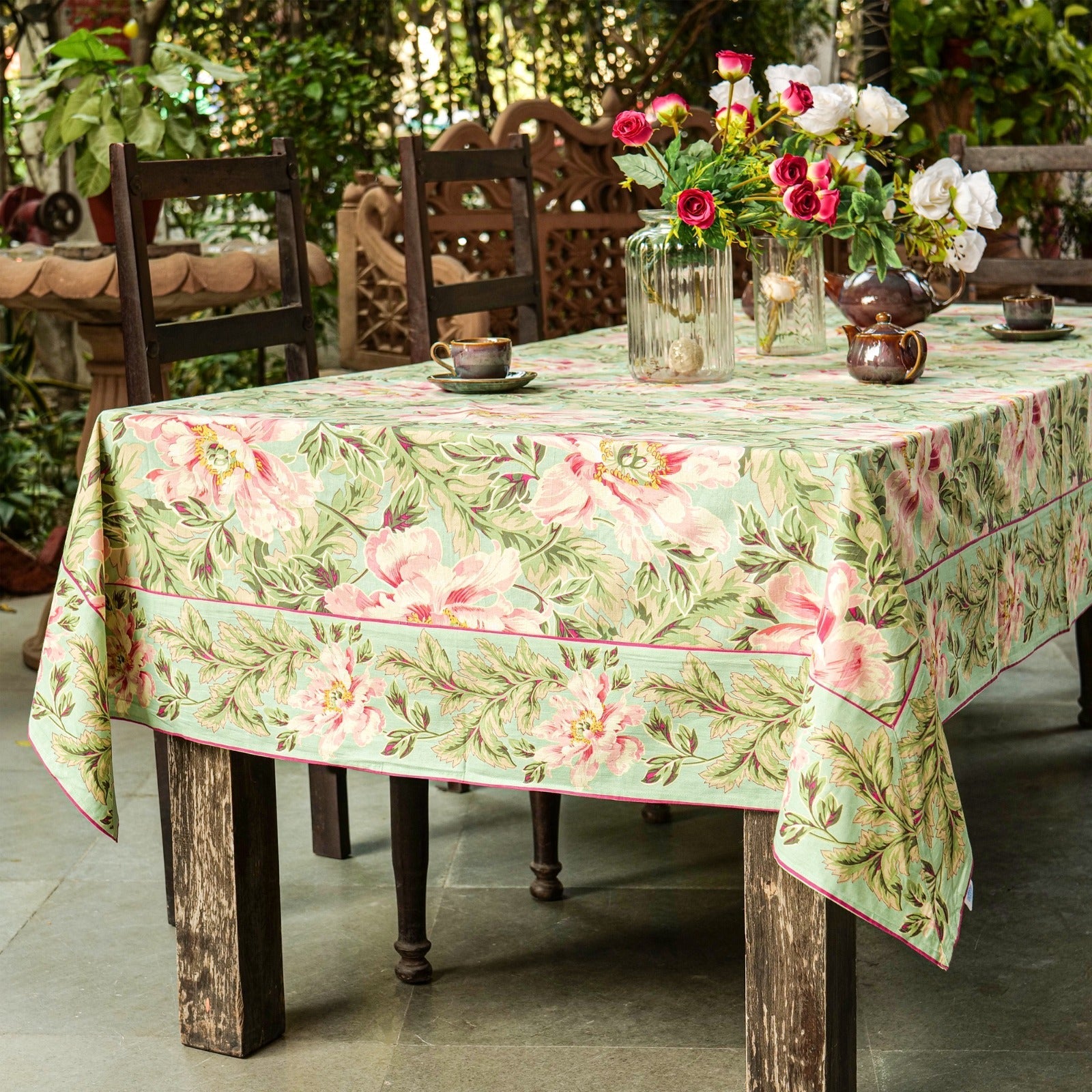
The festive tablecloth is the single most important element of a dressed celebration table. It sets the visual register of the entire evening. Get this right and the rest of the table assembles itself relatively easily.
For an Indian festive occasion, the tablecloth should be in a rich, warm palette: deep jewel tones, traditional Indian motifs, or a warm floral in colours that reflect the spirit of the celebration. Diwali calls for golds, deep reds, and warm ambers. Eid is well suited to rich greens, deep blues, and warm creams. Christmas in an Indian home benefits from deep reds, botanical greens, and warm ivory. A family puja or Navratri celebration suits rich oranges, marigold yellows, and saffron tones.
Size for a festive occasion: go generous. A drop of 12 to 15 inches on all sides gives the table a formal, occasion-appropriate look and signals that the table has been dressed with intention. If extending the table to accommodate more guests, measure the extended length before choosing the cloth.
The Runner: Depth and Definition
A runner over the festive tablecloth in a complementary colourway adds depth and defines the serving zone for the celebration spread.
For a festive table, the runner can be slightly richer in tone than for an everyday setting. A deep gold runner over a floral tablecloth in warm reds and creams. An ivory jacquard runner over a deep jewel-toned cloth. A printed runner in a traditional Indian motif, a paisley or a botanical, over a plain or near-plain festive cloth.
The runner should still be subordinate to the tablecloth rather than competing with it. One dominant element, one supporting element.
Lay the runner centred with 12 to 15 inches of overhang at each end for a festive occasion. The generous overhang is part of what gives the table its dressed quality.
Placemats and Napkins: Individual Settings That Count
On a festive table where the guests are expected to sit and eat a full meal, individual place settings matter more than for a casual family dinner.
Fabric placemats in a plain or subtly printed version of one of the tones in the festive palette give each guest a defined, considered space. On a richly patterned festive tablecloth, plain placemats in a deep coordinating tone give the individual setting clarity without adding more pattern at the table level.
Napkins folded properly at each setting, not left flat or placed casually, are the element that most signals that the table was prepared with genuine care. For a festive occasion, use the standing fold or the diagonal tuck rather than the quick rectangular lay. The extra thirty seconds per setting is visible in the result.
A printed napkin in a warm festive colourway, gold, deep rose, rich terracotta, adds to the visual warmth of the setting. A coordinating napkin in a slightly different print from the tablecloth, at a smaller scale, is another option that adds interest without competing.
The Centrepiece: Festive and Grounded
The festive centrepiece has more latitude than an everyday one. It can be richer, taller (within the conversation-height rule), and more elaborate without looking overdone.
Options that work well for Indian festive tables:
Diyas and candles arranged along the runner, with varying heights created by placing some on small plates or low vessels. The flickering light from multiple diyas across a length of festive tablecloth is one of the most specifically Indian table aesthetics available.
A low arrangement of marigolds, roses, or seasonal flowers in terracotta or brass vessels. Indian festival flowers in Indian vessels on a richly printed tablecloth: this is a complete aesthetic statement that requires nothing else.
A combination of diyas and flowers: low terracotta bowls of marigolds and floating candles at intervals along the runner, with clusters of diyas between them.
Fruit: a brass urli or a terracotta bowl of seasonal fruit, mangoes in season, pomegranates, lychees, in the centre of the runner. Functional and visually abundant.
Keep the centrepiece low enough that conversation across the table remains easy, even on a festive occasion when the table is dressed more fully than usual.
Specific Occasions
Diwali: A tablecloth in warm golds, rich reds, or deep florals in a warm palette. A runner in complementary gold or amber. Napkins in gold or warm terracotta. Diyas and marigolds at the centre. This is the celebration most specifically suited to the richest expression of the festive table.
Eid: A tablecloth in rich greens, deep teal, or warm cream with a traditional motif. A runner in a complementary paisley or plain deep tone. Napkins in cream or a deep green. Fresh flowers in white and green in a simple vessel.
Christmas: A tablecloth in botanical greens and deep reds, or a vintage floral in rich tones. A runner in cream or gold. Napkins in deep red or cream. Candles in clusters at the centre with seasonal greenery.
Family pujas and Navratri: A tablecloth in saffron, marigold yellow, or rich orange tones. A runner in deep red or gold. Marigold flowers in terracotta vessels at the centre. Diyas placed at the four corners of the runner.
The Festive Table Checklist
Festive tablecloth laid with 12 to 15 inch drop on all sides.
Runner centred with 12 to 15 inch overhang at both ends.
Fabric placemats one per guest, one inch from the table edge, centred to the chair.
Cloth napkins properly folded at each setting, standing fold or diagonal tuck.
Centrepiece low, placed along the runner, appropriate to the celebration: diyas, flowers, fruit, or a combination.
Candles or diyas lit just before guests arrive.
Drinks station set up separately so the dining table remains clear for food.
Spare napkins within easy reach.
Frequently Asked Questions
How do you set a table for Diwali? Use a tablecloth in a warm, rich palette: golds, deep reds, warm florals. Add a runner in a complementary gold or amber tone. Place cloth napkins in gold or terracotta at each setting, properly folded. Arrange diyas and marigold flowers along the runner as the centrepiece. Keep the centrepiece low enough not to obstruct conversation across the table.
What size tablecloth do I need for a festive dinner table? For a festive occasion, choose a tablecloth with a drop of 12 to 15 inches on all sides. This is more generous than the everyday 10-inch drop and gives the table a formal, dressed quality appropriate to the celebration. Measure the table, including any extensions for additional guests, before choosing.
What makes a table setting feel festive? The combination of a richly toned tablecloth, properly folded cloth napkins at each setting, a considered centrepiece, and candles or diyas. The difference between a festive table and an everyday one is in the richness of the palette, the generosity of the drop on the tablecloth, and the care taken with each individual setting. A properly folded napkin at each place signals more than any other single element that the occasion has been prepared for.
Can you use multiple patterns on a festive table? With care. The tablecloth establishes the dominant pattern. A runner in a plain or very subtly different pattern adds depth without competing. Napkins in a coordinating solid or small-scale print complete the settings. More than two patterns at the same visual weight on a festive table is usually too much. One dominant pattern and one or two supporting elements in coordinating tones is the reliable formula.
What flowers work best for an Indian festive table? Marigolds are the most specifically Indian choice and the one most associated with celebration: rich in colour, widely available, and generous in volume for a relatively low cost. Roses in deep reds or creams work for more formal occasions. Jasmine adds fragrance as well as visual warmth. White flowers in simple vessels suit Eid and Christmas settings. The vessel matters as much as the flower: terracotta and brass are the most at-home with Indian festive aesthetics.
A festive table in an Indian home is one of the most specific and rewarding table-setting challenges available. The colours, the motifs, the flowers, the candles and diyas: these are elements with a visual language that belongs to the occasion and to the culture simultaneously.
The tablecloth leads. The runner defines the centre. The napkins finish each setting. The centrepiece brings the occasion to life. Applied with some care for the palette and the proportions, this system produces a table that looks like the celebration it is part of.
Shop festive tablecloths, table runners, and napkin sets at April Cornell India.
Suggested tags: festive table setting India, Diwali table setting, Eid table decor, Christmas table India, Indian celebration table, festive tablecloth, festive dining table India