


Cart
0
-
A layered bed is not simply a bed with more things on it. It is a bed where each layer has a purpose, a position, and a relationship with the layers around it. The difference between a bed that looks luxurious and one that looks cluttered is almost always a question of whether the layers were chosen and placed with some logic, or simply accumulated.
This guide covers that logic: what goes where, in what order, and how to combine prints, textures, and colours so each layer adds something rather than competing with what is already there.
Why Layering Works
A flat, single-layer bed looks made but not dressed. It reads as functional. A layered bed has depth, warmth, and a quality of abundance that changes how the whole room feels from the doorway.
The visual principle is the same one that makes a well-set dining table look more considered than a bare one: multiple elements working together produce a result that none of them achieves alone. The bed cover does not look luxurious by itself. The throw does not look luxurious by itself. Together, placed correctly, they do.
The Layering Order
Every well-layered bed follows the same sequence from bottom to top.
Layer 1: The fitted sheet. The invisible foundation. It needs to be smooth and properly fitted to the mattress before anything else goes on. A bunched or poorly fitted sheet undermines everything above it.
Layer 2: A flat sheet or light cotton layer. Optional but useful in Indian bedrooms, particularly in warmer months when a flat cotton sheet is the actual sleeping layer. It also adds a visible strip of a different fabric or colour when the bed cover is folded back, which contributes to the layered effect.
Layer 3: The bed cover. This is the primary decorative layer and the one that defines the colour and print of the bed. It covers the full mattress and drapes over the sides and foot. Fold the top edge back by approximately 30cm to reveal the layer beneath: this fold-back is what signals that the bed has been layered rather than simply covered.
Layer 4: The quilt or extra warm layer. In cooler months, a cotton quilt folded across the lower half or two-thirds of the bed adds visual weight and texture while remaining genuinely functional. A printed quilt in a coordinating colourway adds to the layering without requiring a separate throw.
Layer 5: The throw. Folded in thirds lengthwise and then in half across the width, laid horizontally across the foot of the bed. The throw adds a third colour or texture and completes the foot of the bed visually. It should sit across the lower quarter to third of the mattress and hang evenly on both sides.
Layer 6: The pillows. Sleeping pillows in cases at the back, standing upright. Additional pillows in front of those for height. Decorative cushion covers at the very front. The pillow arrangement at the head of the bed carries as much visual weight as all the other layers combined.
Getting the Pillow Arrangement Right
The head of the bed is where the eye goes first. A flat, two-pillow arrangement looks functional. A full, multi-layered pillow arrangement looks composed.
The standard arrangement that works for most beds:
Two or three pillows at the back in plain cases, standing upright and full. These are the structural layer: they create height and depth.
Two sleeping pillows in front of those, in cases that coordinate with the bed cover print or pick up one colour from it.
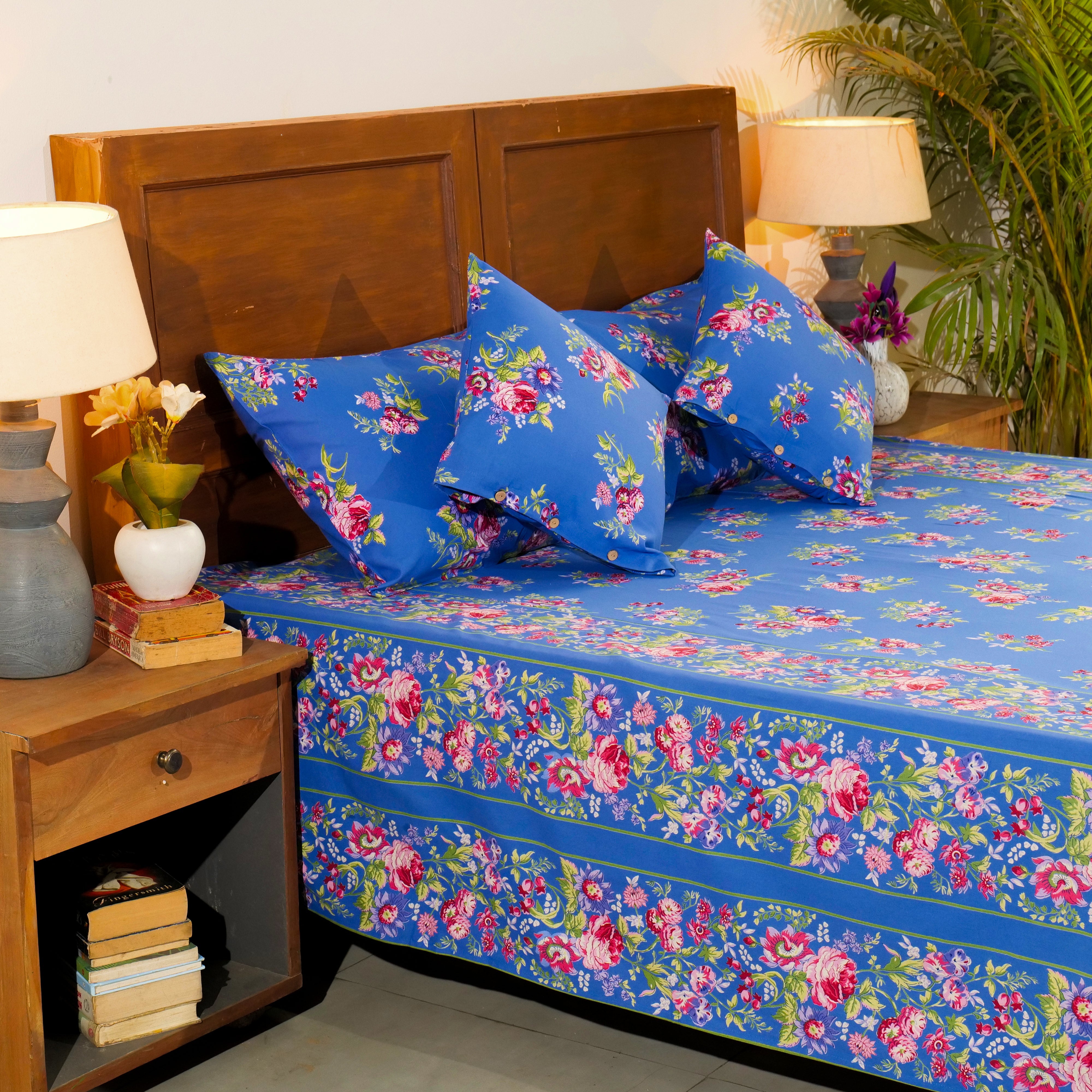
Two to four decorative cushion covers at the very front, in a print or texture that contrasts with the bed cover. A plain bed cover calls for a printed cushion. A printed bed cover calls for a cushion in a plain tone pulled from the print.
The cushion covers should not match the bed cover exactly. The relationship between them is what creates visual interest. Matching produces uniformity. Coordinating produces character.
Combining Prints Without Chaos
The anxiety most people have about layering a bed comes from not knowing how to combine prints without the result looking confused. The principle that resolves this is straightforward.
One dominant print, two supporting elements. The dominant print is typically the bed cover. The supporting elements, the throw and the cushion covers, are either in a plain colour drawn from the dominant print's palette, or in a secondary print at a different scale from the dominant one.
Specifically: a large-scale floral bed cover pairs well with a small-scale geometric cushion cover in a tone from the floral. A botanical print bed cover pairs well with a plain throw in the deepest colour in the botanical's palette. A plain bed cover pairs well with a strongly printed cushion and a textured throw.
What does not work: two large-scale prints of similar visual weight placed directly adjacent. A large floral bed cover with a large paisley throw at the foot. Both compete. Neither resolves.
Combining Textures
Texture is the element of bed layering that most distinguishes a considered result from an ordinary one. Two pieces in the same fabric at the same weave, even in different colours, read as flat. Two pieces in different textures, even in similar colours, read as layered.
A woven cotton bed cover with a quilted cotton throw. A jacquard-woven cushion cover against a plain cotton pillowcase. A slightly nubby linen-feel throw against a smooth cotton bed cover. Each of these combinations has visual depth because the light hits the different surfaces differently.
For Indian bedrooms, cotton is the practical base fabric for most layers. Introducing one layer in a different weave or weight, a jacquard bed cover or a quilted throw, is usually enough to add the textural interest that makes the whole bed look more considered.
A Layered Bed for Different Seasons
Indian summer: Fitted sheet, flat cotton sheet, light cotton bed cover folded back. Two to four cushion covers at the head. No throw needed at the foot: the heat makes it unnecessary and it can be stored or draped over a chair. The layering is lighter but the cushion arrangement at the head still carries the visual depth.
Indian winter: Fitted sheet, flat sheet, bed cover, cotton quilt folded across the lower two-thirds of the bed, throw at the foot. Full pillow arrangement at the head. This is the version of the layered bed that has the most visual weight and warmth.
Air-conditioned room year-round: The full layered version regardless of season. The quilt and throw are both functional and decorative.
How Many Layers Is Too Many
The right number of layers for an Indian bedroom is typically four to five on the bed surface plus the full pillow arrangement. Beyond five surface layers, the bed starts to look as if it cannot be easily unmade and remade, which undermines the practical purpose of the bedroom.
The test is whether the bed can be remade to the same standard in under five minutes each morning. If the layering requires more effort than that consistently, it is too complex for daily use. The luxury of a layered bed comes from it looking effortless. Effortlessness requires that the system is simple enough to repeat every day.
Frequently Asked Questions
How do you layer a bed properly? Start with a fitted sheet, add a flat sheet or light cotton layer, place the bed cover over everything and fold the top edge back by 30cm to reveal the layer beneath. Add a throw folded horizontally across the foot. Place sleeping pillows at the back, additional pillows in front, and decorative cushion covers at the very front. Each layer should coordinate with rather than match the others.
How do you combine prints when layering a bed? Use one dominant print and two supporting elements. The dominant print is typically the bed cover. The supporting elements, the throw and cushion covers, are in either a plain colour drawn from the dominant print's palette or a secondary print at a different scale. Avoid two equally bold prints of similar scale placed directly adjacent.
How many cushions do you need on a layered bed? Two to four decorative cushion covers at the front of the arrangement, depending on bed size. A double bed looks complete with two. A king bed has room for three or four. The cushion covers should coordinate with the bed cover without matching it exactly.
How do you layer a bed for an Indian summer? Use a fitted sheet, a flat cotton sheet as the sleeping layer, and a light cotton bed cover folded back at the top. Keep the cushion arrangement at the head of the bed. Store or drape the throw rather than placing it at the foot. The layering is lighter but the head of the bed still carries the visual depth of the full arrangement.
What is the purpose of a throw at the foot of the bed? A throw at the foot adds a third layer of colour and texture that completes the visual composition of the bed. It also has a functional purpose: an extra layer for cool nights or air-conditioned rooms, immediately accessible without unmade the bed. Folded correctly in thirds and then halved across the width, it sits cleanly across the lower quarter of the mattress.
Can you layer a bed without buying everything new? Yes. The most immediate improvement to any existing bed arrangement comes from adding one throw at the foot, folded properly, and rearranging the pillows to include additional height at the back. These two changes, which can use linen already in the home, produce most of the visual improvement of a fully layered bed.
A layered bed is a system rather than a style. The system is: each layer has a position, a purpose, and a relationship with the layers around it. Applied consistently, this system produces a bedroom that looks considered every morning in the five minutes it takes to make the bed.
The specific pieces matter less than the logic of how they are placed. Start with what is already in the room and add one layer at a time until the bed reads as composed rather than simply covered.
Shop bed covers, quilts, throws, and cushion covers at April Cornell India.
Suggested tags: how to layer a bed, bed layering India, luxurious bedroom, bed cover India, throw blanket, cushion covers, bedroom styling India, bedding India