


Cart
0
-
A freshly ironed tablecloth is one of those things that makes an immediate difference to a table setting without requiring any other change. It also intimidates people. The cloth is large. The ironing board is small. There is a fold down the centre from storage that resists every attempt to remove it. The print looks as if it might scorch.
None of these problems are as difficult as they appear. This guide works through every aspect of ironing a cotton tablecloth: the setup, the technique, the centre crease problem, how to handle printed fabric, and how to iron six napkins quickly before guests arrive.
The Single Most Important Thing
Iron the tablecloth while it is still slightly damp.
This bears stating before anything else because it is the principle that makes everything else easier. A cotton tablecloth ironed while slightly damp requires less heat, less pressure, and less time than one ironed bone dry. The moisture in the fibres allows them to relax under the iron, which is why the wrinkles release cleanly rather than needing to be pressed out forcefully.
The ideal window is when the cloth has been air-dried to approximately 80 percent dry: cool to the touch, no longer wet, but not yet fully crisp. If the cloth has already dried completely, mist it evenly with a spray bottle filled with water and leave it for two to three minutes before ironing. The mist needs time to penetrate the fibres rather than sitting on the surface.
The Right Iron Setting
For cotton table linen, use the cotton setting on the iron with the steam function on.
Most irons label settings by fabric. The cotton setting is typically the highest temperature setting available on a domestic iron. This is correct: cotton requires high heat to release wrinkles properly. Lower settings do not have enough heat to relax the cotton fibres and the result is a cloth that looks partially ironed at best.
The steam function adds moisture as you iron, which is useful for areas that have dried unevenly or for stubborn creases that need the combination of heat and moisture to release. If the iron does not have a steam function, a spray bottle of water used sparingly on particularly stubborn areas produces the same effect.
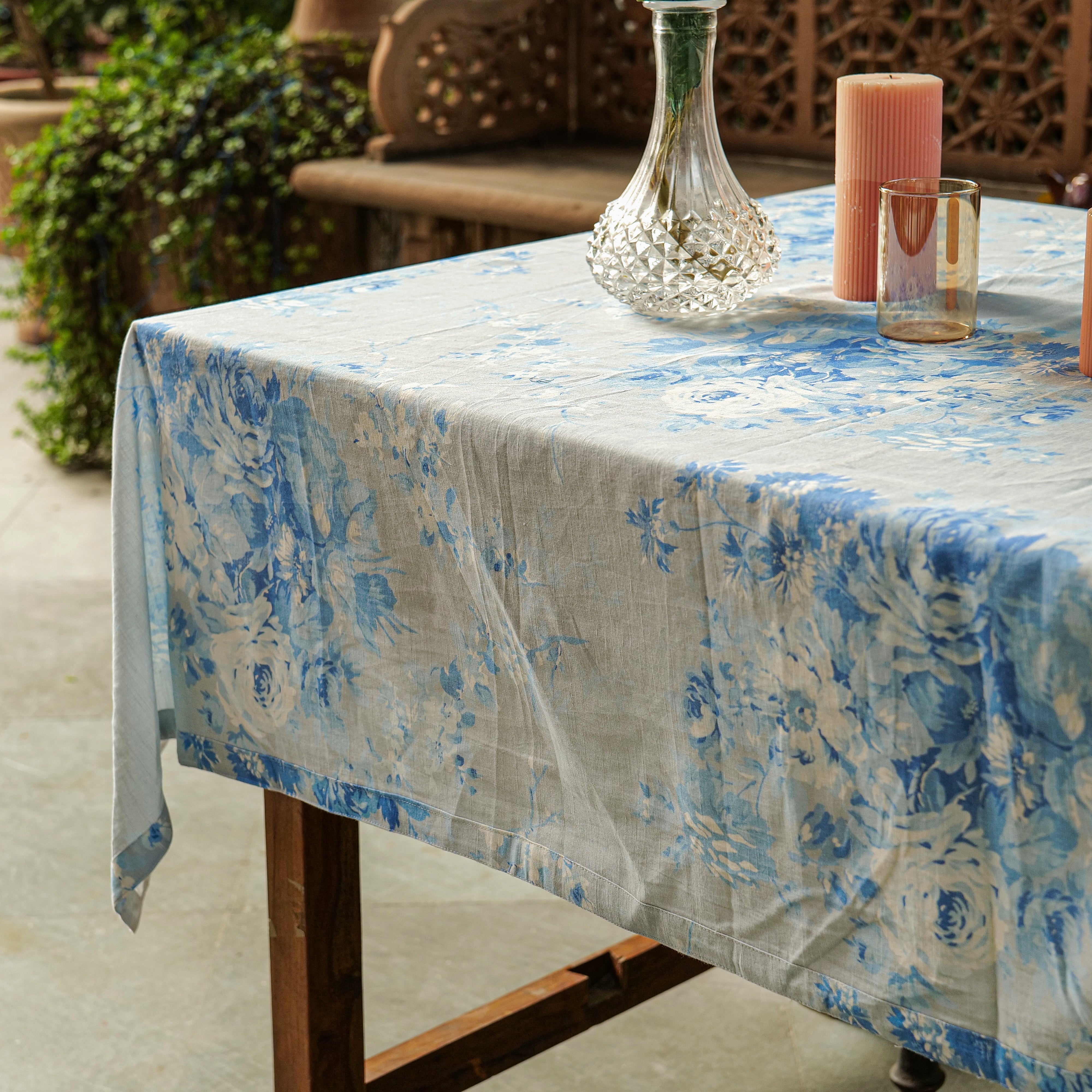
For printed cotton: Use the cotton setting but iron on the reverse side of the fabric rather than the printed face. The heat from the iron at cotton setting can produce a slight sheen on the printed surface over repeated ironing. Ironing from the back protects the print and produces the same result on the surface.
For embroidered or textured cotton: Iron on the reverse side with a thin cotton cloth between the iron and the fabric. This is particularly relevant for jacquard weaves, where the surface texture needs to be preserved and direct ironing can flatten it.
The Setup: Where to Iron a Large Tablecloth
The standard domestic ironing board is designed for shirts and trousers. A six-seater tablecloth at approximately 90 by 60 inches does not fit on it without most of the cloth hanging off the sides and re-wrinkling as you work the rest of it. There are two approaches that work better.
Using the dining table itself. Cover the table with two layers of folded bath towels or a folded cotton blanket to create a padded, heat-resistant surface. Lay a clean cotton sheet over the top of the padding. The tablecloth then lies flat on this improvised surface and you can iron it in sections, moving the cloth as each section is completed, without any part of it hanging and re-wrinkling.
This method is used in households with large tablecloths everywhere that a standard ironing board is impractical. It is faster and produces a better result because the cloth stays flat throughout. The only caution: make sure the padding is sufficient. Direct ironing on an unpadded table damages both the table surface and the tablecloth.
Using the ironing board for one section at a time. Fold the tablecloth in half lengthwise so it fits the width of the ironing board. Iron the half that is on the board, then shift the cloth along and iron the next section. Work in a consistent direction, always moving the ironed portion to the same side so it hangs flat rather than being refolded. This takes longer than the table method but requires no additional setup.
The Technique: How to Iron Without Making Things Worse
Always move the iron in the direction of the fabric weave. This is the direction of the threads: lengthwise or crosswise. Moving the iron in a circular motion against the weave stretches the fibres and distorts the fabric over time. Long straight strokes, either lengthwise or crosswise, are correct.
Work from the centre outward. On a flat section of tablecloth, start ironing at the centre and work toward the edges. This pushes any small fabric distortions toward the edge of the cloth where they disappear off the hem rather than bunching in the middle of the ironed section.
Iron the hems carefully. The hem of a tablecloth, where the fabric is doubled and stitched, is the thickest part and takes longer to iron smooth. Press the iron firmly along the hem, hold for a few seconds, and move along. Do not rush this part: a poorly ironed hem sits unevenly and is visible when the cloth is on the table.
Do not over-iron. A tablecloth does not need to be perfectly flat to the degree of precision of a shirt collar. It needs to look smooth when laid on a table with objects on top of it. Some very faint texture is invisible once the table is set. Spending additional time chasing tiny wrinkles in areas that will be covered by placemats and serving dishes is not a good use of effort.
The Centre Crease Problem
Every tablecloth that has been stored folded develops a crease at the fold line. In the middle of the cloth, this crease is often the most stubborn part of the ironing job because the fabric has been compressed along that line repeatedly.
The approach that works: dampen the crease specifically with extra moisture from the spray bottle or the steam function, then press the iron firmly along the crease, hold for five seconds, and lift. Repeat two or three times. The combination of concentrated moisture and heat releases even an established fold crease in most cotton fabrics.
What does not work is running the iron repeatedly over the crease at normal speed. Speed does not help here: sustained heat and moisture does.
For a crease that is particularly deep, after ironing place the cloth face-down on the table surface and leave it flat under a slight weight for five minutes while still slightly warm. The warmth in the fibres continues to work as the cloth cools and the weight keeps the crease area flat while it does so.
If a crease persists after ironing, it will largely disappear once the cloth is laid on the table. The weight of the fabric and the objects placed on it flattens most residual fold lines within a few minutes.
Ironing a Round Tablecloth
A round tablecloth requires slightly more care than a rectangular one because the circular hem cannot be ironed in straight strokes without distorting it.
Iron the body of the cloth in the usual way, working in sections. For the hem, iron small sections at a time following the curve of the hem, lifting and repositioning the iron rather than dragging it around the curve. Taking ten seconds per section of hem and working around the full circumference produces a smooth hem without distortion.
The centre crease problem does not apply to a round tablecloth stored loosely folded in quarters: the quarter-fold creases are short and easy to remove. A round tablecloth stored tightly folded into an eighth or sixteenth will have more creases but the same technique resolves them.
Ironing Cloth Napkins Quickly
Six napkins before a dinner party is a realistic task if approached efficiently. The key is to iron all six in one continuous session, not to iron each one to completion before starting the next.
The efficient method:
Lay all six napkins flat on the ironing board or table surface in a stack, lightly misted with water. Take the first napkin, iron one side flat, flip and iron the other side flat, set it aside. Move to the second, then the third, through all six without stopping. By the time you finish the sixth, the first has cooled enough to fold cleanly.
For a napkin that will be used in the rectangular lay fold, iron it flat and fold it while still slightly warm. The warmth helps the fold lines hold.
For a napkin that will be used in the standing fold or the fan fold, a slightly crisper, more fully ironed result is worth the extra thirty seconds per napkin because those folds depend on the fabric holding its shape.
The time estimate: Six napkins ironed with this method takes eight to ten minutes once the iron is at temperature. Not a significant imposition before a dinner party.
What to Do When There Is No Time to Iron
Guests are arriving in forty minutes and the tablecloth has just come out of the wash. There are two alternatives to ironing that produce an acceptable result.
The table drape method. Lay the damp cloth directly on the dining table. Smooth it flat with your hands, adjusting from the centre outward. The weight of the fabric against a flat surface and the natural drying process produces a reasonably smooth cloth within thirty minutes. Any remaining wrinkles are largely invisible once plates and serving dishes are on the table.
The hanging method. Hang the damp tablecloth over a door or rail, smoothed and flat, for twenty minutes before laying it. The weight of the hanging cloth releases most wash wrinkles. This works less well for fold creases from storage but handles wash wrinkles effectively.
Both methods are a practical alternative to ironing when time does not permit it. A slightly relaxed tablecloth that has been smoothed by hand is considerably better than a heavily creased one that has been left in a pile.
Frequently Asked Questions
What setting should I iron a cotton tablecloth on? The cotton setting with the steam function on. This is the highest temperature setting on most irons and the correct one for cotton fabric. Lower settings do not release the wrinkles in cotton fibres effectively. For printed or embroidered cotton, iron on the reverse side at the same setting to protect the surface.
How do you iron a large tablecloth without an ironing board? Cover the dining table with two layers of folded bath towels and a clean cotton sheet on top. The tablecloth lies flat on this padded surface and can be ironed in sections without hanging off the sides of a small ironing board. This method is faster and produces a flatter result than ironing on a standard board for a large cloth.
How do you get the centre crease out of a tablecloth? Apply extra moisture to the crease using a spray bottle or the iron's steam function. Press the iron firmly along the crease and hold for five seconds before lifting. Repeat two to three times. The combination of concentrated moisture and heat releases even an established fold crease. After ironing, place the cloth face-down on a flat surface for five minutes while still warm.
Should you iron a tablecloth on the front or the back? For plain cotton, either side works. For printed cotton, iron on the reverse side to protect the print from the iron's heat, which can produce a slight sheen on the printed surface over repeated ironing. For embroidered or jacquard-woven cotton, iron on the reverse side with a thin cloth between the iron and the fabric to protect the texture.
Is it necessary to iron a tablecloth every time? No. For everyday family use, a tablecloth taken promptly from the wash, shaken out, and hung flat to dry has minimal wrinkles and is entirely correct on the table. Ironing produces a crisper finish and is most worthwhile for dinner parties, formal occasions, or when the tablecloth has been stored folded for some time and has acquired fold creases.
How do you iron six cloth napkins quickly before a dinner party? Lay all six napkins lightly misted with water on the ironing surface. Iron each one flat on both sides in sequence without stopping to fold between napkins. Fold each napkin after all six have been ironed, while they are still slightly warm from the iron. The full process takes eight to ten minutes once the iron is at temperature.
Ironing table linen is not a skilled task. It requires the right temperature, a slightly damp cloth, and a surface large enough to work on comfortably. With these in place, a tablecloth that looked unsuitable for a dinner party comes out table-ready in twenty minutes.
The centre crease, the printed surface, the round hem: each has a specific approach and none of them is difficult once the approach is known. The anxiety about ironing a tablecloth is almost always larger than the task itself.
Shop cotton tablecloths and napkin sets at April Cornell India.