


Cart
0
-
Not all tablecloths are the same purchase. The cloth that works for a Tuesday dinner with the family is not necessarily the one you want for a formal lunch with guests. The one you bring out for Diwali has different requirements from the one on the table on an ordinary Sunday.
Most buying guides treat the tablecloth as a single category of object. This one does not. What follows is a breakdown by occasion, with specific guidance on fabric, size, colour, and what to pair each cloth with. The aim is that by the end of it, you know exactly which cloth to reach for and why.
The Everyday Tablecloth
Fabric: Cotton, without question. It is absorbent, machine washable, and softens rather than deteriorates with repeated washing. Avoid synthetic fabrics for daily use: they are harder to clean properly and they develop a worn look faster than cotton does.
Print or plain: A printed cotton cloth in a mid-tone palette is the practical choice for everyday use. It hides the evidence of regular meals better than a white or pale cloth, brings warmth and character to the table without requiring anything else to dress it up, and coordinates naturally with the colours of Indian cooking.
Size: A drop of 8 to 10 inches on all sides is right for everyday use. Long enough to look considered, short enough to stay clear of chairs and laps. For a standard six-seater table at 72 by 36 inches, that means a cloth of approximately 88 by 52 inches minimum.
What to pair it with: A fabric runner in a coordinating colour, six fabric placemats, and simply folded cloth napkins. The full setting takes under ten minutes and the table looks dressed for the day.
The mistake to avoid: Keeping the good tablecloth for guests and using a plastic sheet or nothing for the family. The everyday table is where most meals happen. It deserves the same attention.
The Dinner Party Tablecloth
Guests are coming. The table needs to signal that the evening has been thought about.
Fabric: Cotton or a cotton-linen blend. Both drape well, both iron to a clean finish, and both have the weight and substance that a dinner party setting requires. A jacquard-woven cotton in ivory or a soft neutral carries enough formality for a dinner party without the maintenance anxiety of pure linen.
Print or plain: Either works, but the choice affects everything else on the table. A plain or jacquard cloth in a neutral gives you the freedom to dress the table with a more expressive runner, richer napkins, and a more elaborate centrepiece. A printed cloth takes on more of the decorative work itself, which means the other elements can be quieter.
Size: Increase the drop to 10 to 12 inches for a dinner party. The extra length gives the table a more formal, composed look and signals that this is a dressed occasion rather than an everyday one.
What to pair it with: For a plain cloth, a printed runner in a warm colour pulled from your napkin set. For a printed cloth, a plain runner in a toning colour and napkins folded properly at each setting. Fresh flowers, kept low.
The mistake to avoid: Ironing the tablecloth after it is already on the table. Iron it flat, then lay it. The crease down the middle that comes from folding is fine. The wrinkles from a rushed last-minute iron are not.
The Festive Tablecloth
Indian festivals call for a table that reflects the occasion. Diwali, Eid, Christmas, Holi, a family puja, a wedding anniversary dinner at home: each one is a meal that the table should dress up for.
Fabric: Cotton. The festive occasions in the Indian calendar involve rich food, lots of guests, and long evenings. A fabric that washes well and tolerates the demands of a celebratory meal is more valuable on a festive night than one that looks extraordinary but cannot be near a serving spoon without anxiety.
Print or plain: A printed cloth in a festive colourway is the right choice. Deep jewel tones, warm golds, rich florals, and traditional Indian motifs like paisleys and botanicals all work. The cloth can carry the spirit of the occasion without requiring elaborate decoration above it.
Size: For a festive table, go generous. A drop of 12 to 15 inches lengthens the table visually and creates the sense of occasion that a festive dinner calls for. If you are extending the table to accommodate more guests, measure the extended length and add the drop to that figure, not to the everyday measurement.
What to pair it with: A runner in a complementary jewel tone or a richer version of the same colour family. Cloth napkins in a deep, warm print folded at each setting. Candles or diyas at the centre. The table should look abundant without looking overcrowded, which means leaving enough tablecloth visible between elements.
The mistake to avoid: Saving the festive tablecloth for only the biggest occasions of the year. A good festive cloth brought out for a Saturday family dinner in October transforms an ordinary meal into something that feels like a small celebration. Use it more than once a year.
The Round Table Tablecloth
Round tables are common in Indian homes, particularly in smaller apartments and kitchens. Choosing a tablecloth for a round table follows the same logic as a rectangular one, with one additional consideration: the overhang has to be even all the way around, or the cloth looks lopsided.
How to measure: Measure the diameter of the table and add twice the desired drop. A 48-inch round table with a 10-inch drop needs a round cloth of at least 68 inches across. A 54-inch round table with a 12-inch drop needs a cloth of at least 78 inches.
Always buy round for round: A rectangular cloth draped over a round table bunches at the corners and hangs unevenly. A round tablecloth is the right cloth for a round table, without exception.
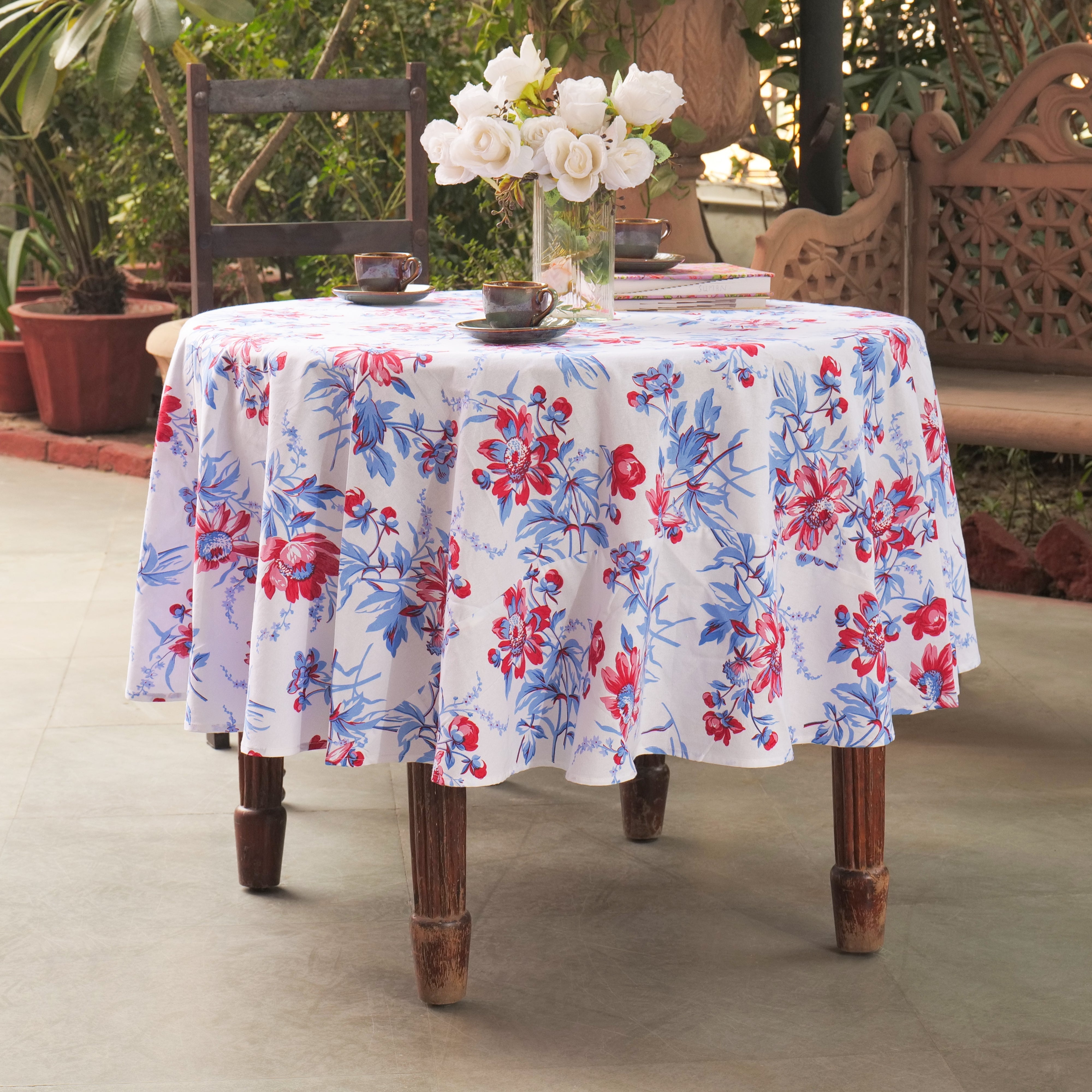
Print or plain: Floral and botanical prints work particularly well on round tables because the circular shape allows the print to be seen from all sides simultaneously. The whole pattern is visible in a way it is not on a rectangular table where much of it disappears under the runner and placemats.
What to pair it with: On a round table there is no long axis for a runner. Use a low centrepiece directly in the centre, with placemats and napkins at each seat. The cloth does the decorative work that the runner would do on a rectangular table.
The Outdoor or Garden Tablecloth
A meal outside, whether on a balcony, a terrace, or a garden, asks different things of a tablecloth than an indoor one does.
Fabric: Still cotton, but choose a cloth you are not precious about. Outdoor meals involve unpredictable spills, wind that can catch a cloth and pull it sideways, and direct sunlight that fades fabric faster than indoor light does. A cheerful, robust printed cotton that you can wash without anxiety is the right choice outdoors.
Practical considerations: Weight the corners with something if the table is exposed to wind. Plates and serving dishes help. A tablecloth that lifts in a breeze mid-meal and ends up in the food is a specific kind of hosting disaster.
Size: Keep the drop short outdoors, 6 to 8 inches. A long drop catches on chairs, picks up the ground, and becomes a liability in a way it does not indoors.
What to pair it with: Keep it simple. Fabric placemats, cloth napkins, and a low centrepiece that will not blow over. Outdoors is not the setting for an elaborate layered table.
The Tablecloth You Own Once and Use Forever
There is an argument for building a small, considered collection of tablecloths rather than owning many mediocre ones.
Three cloths cover most situations in an Indian home:
One everyday printed cotton cloth in a mid-tone botanical or floral print. Used for daily family meals and most casual occasions. Washed frequently, replaced every few years.
One plain or jacquard cloth in ivory or a soft neutral. Used for dinner parties and formal occasions where a plain base gives the rest of the table room to work. Ironed and stored flat between uses.
One festive cotton cloth in a rich, warm print. Used for Diwali, Eid, Christmas, family celebrations, and any occasion that calls for the table to feel like the evening matters. Brought out freely rather than saved.
Three tablecloths, chosen well, outperform a cupboard full of compromises.
Frequently Asked Questions
What is the right tablecloth for a dinner party? For a dinner party, choose a cotton or cotton-linen blend tablecloth in plain white, ivory, or a jacquard-woven neutral. Increase the drop to 10 to 12 inches for a more formal look. Pair it with a printed runner in a warm tone and cloth napkins folded at each setting. Iron the cloth flat before laying it on the table.
What size tablecloth do I need for a round table? Measure the diameter of the round table and add twice the desired drop. A 48-inch round table with a 10-inch drop needs a round tablecloth of at least 68 inches. Always choose a round tablecloth for a round table. A rectangular cloth will bunch at the corners and hang unevenly.
What is the best tablecloth for Diwali or festive occasions in India? A printed cotton tablecloth in a rich, jewel-toned colourway works best for Indian festive occasions. Deep gold, terracotta, ocean blue, or floral prints in warm palettes reflect the spirit of the celebration without requiring elaborate additional decoration. Increase the drop to 12 to 15 inches for a more generous festive look.
How often should I wash a tablecloth? An everyday tablecloth used for daily family meals should be washed once a week or after any visible spill or staining. A dinner party cloth should be washed after each use before being stored. Cotton tablecloths machine wash well at 40 degrees. Air dry and iron while slightly damp for the best result.
What drop should a tablecloth have? For everyday use, 8 to 10 inches of drop on all sides. For a dinner party, 10 to 12 inches. For a festive or very formal occasion, 12 to 15 inches. A drop shorter than 6 inches looks underdressed on any table. A drop that reaches the floor is reserved for formal banquet settings and is unusual in a home context.
Can I use one tablecloth for all occasions? A jacquard tablecloth in ivory or a warm neutral comes closest to working across all occasions. It is formal enough for a dinner party and warm enough for everyday use, and it coordinates with most runners, napkins, and dinnerware. For festive occasions in particular, a separate cloth in a richer colourway will serve the table better than a neutral one.
A tablecloth is not a single purchase but a category with several sub-decisions inside it. Knowing which occasion you are buying for makes each of those decisions straightforward rather than open-ended.
The cloth that fits the table, suits the occasion, and washes well enough to be used freely is always more valuable than the one reserved for a moment of perfection that keeps getting postponed.
Shop tablecloths for every occasion at April Cornell India.