


Cart
0
-
Most dining tables in Indian homes are either fully bare or fully dressed for an occasion. The everyday table gets a plastic sheet or nothing at all. The festive table gets pulled out of storage, overdressed, and then packed away again.
There is a lot of room between those two states, and that room is where a dining table becomes something worth sitting at every day rather than just on special occasions.
These ten ideas work for both. Some take thirty seconds. Some require one purchase. None of them require a renovation.
1. Start With a Tablecloth That Earns Daily Use
The reason most tablecloths stay in the cupboard is that they feel too good for a Tuesday. The fix is to own a tablecloth that does not feel precious, one you are genuinely comfortable pulling out for dinner on an ordinary evening.
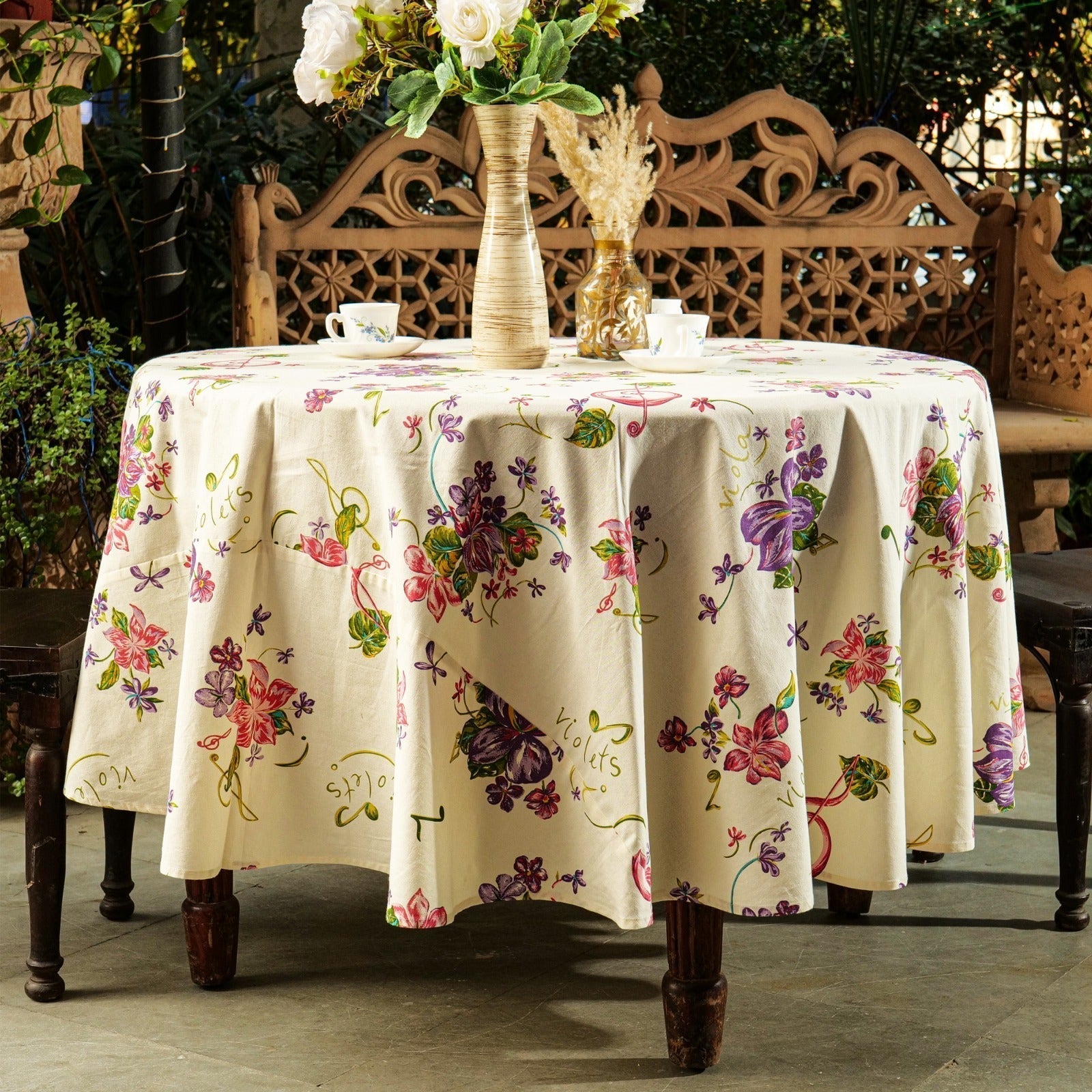
Cotton is the answer. It washes well, softens with use rather than deteriorating, and does not require careful handling. A printed cotton tablecloth in a botanical or geometric pattern reads as considered without requiring any effort on your part. Lay it, eat on it, wash it, repeat.
A dining table with a good everyday tablecloth looks more intentional than a bare one regardless of what else is on it. It is the lowest-effort change with the most visible result.
2. Use a Table Runner to Define the Centre
A table runner down the length of the table does two things. Visually, it gives the table a spine, an axis that the rest of the setting organises itself around. Practically, it tells everyone at the table where the food lives, which keeps platters from migrating to odd corners and the table from looking disorganised mid-meal.
For everyday use, a runner on a bare wooden table is enough. For a more layered look, a runner over a tablecloth in a contrasting but coordinating colour adds depth without requiring anything more elaborate.
The runner should overhang by 12 to 15 inches at each end. On a wide table, two runners crossed at right angles create a natural quadrant for serving dishes that works particularly well when multiple shared bowls are on the table at once.
3. Coordinate Placemats and Napkins as a Set
Individual placemats bought separately, in different colours, from different sources, rarely hold together as a setting. A matched set of six placemats and napkins, chosen together, makes the table look coherent in the time it takes to lay them out.
Fabric placemats over hard or plastic ones for any table meant to look well dressed. They absorb condensation, they add texture, and they stay where placed without sliding around through the meal.
The print of the placemats does not need to match the tablecloth exactly. A complementary colour, or a different scale of a similar pattern, reads as intentional rather than matchy. The discipline is in limiting the palette, not in replicating it.
4. Keep the Centrepiece Low
The most common mistake with dining table centrepieces is height. A tall arrangement looks impressive on a sideboard. At a dining table, it creates a wall between the people sitting across from each other. Conversation moves around it rather than through it, and the table stops feeling like a place for a meal and starts feeling like a display.
The rule is practical: if you cannot comfortably see the person across the table over the centrepiece, it is too tall.
Low options that work well: a shallow bowl of seasonal fruit, a cluster of candles in varying heights that still stay under ten inches, a single broad-mouthed vase with a flat arrangement of flowers, or a row of small earthenware pots along the runner. All of these add to the table rather than dominating it.
5. Introduce a Floral Print Somewhere
Floral prints on a dining table do something that plain fabrics cannot. They bring warmth, a sense of abundance, and a quality of attention that makes the table feel genuinely dressed rather than just covered.
This does not mean every element needs to be printed. One floral piece, whether a tablecloth, a runner, or a set of napkins, is enough. The other elements can stay plain and the floral carries the whole table.
In Indian homes, this works particularly well because the visual richness of a good floral print coordinates naturally with the colours of the food itself. A bowl of dal, a platter of vegetables, a pot of rice: these are already colourful. A table that meets them with some visual warmth of its own makes the whole meal look more generous.
6. Fold the Napkins
An unfolded napkin, left flat or loosely crumpled on the plate, is a missed opportunity. A folded one takes ten seconds and changes the quality of each place setting visibly.
The standing fold: fold the napkin into a rectangle, then into thirds lengthwise, stand it upright on the plate. Clean, simple, done.
The diagonal tuck: fold into a triangle, half-tuck under the side plate with the point facing the guest. This works particularly well with a printed napkin where you want the pattern visible.
The loose roll: roll without pressing the folds flat, lay across the plate or slip through a napkin ring. The most relaxed of the three and entirely appropriate for everyday meals.
Any of these, done consistently across all the settings, makes a table look finished. It costs nothing except thirty seconds of attention.
7. Bring Fresh Flowers, Without the Fuss
A vase of fresh flowers on the dining table is one of the oldest and most reliable forms of table decor because it works every time. The colour, the scale, the sense of something living at the table. It changes the quality of a meal in a way that manufactured objects rarely do.
The version that works for everyday life is not an elaborate arrangement. It is whatever is available at the market that week, cut short and placed in a simple vessel. Marigolds in a brass bowl. Seasonal blooms in an earthenware jug. Even a single stem in a small bottle on the runner.
The trick is to keep them low and to not overthink the vessel. A plain terracotta or ceramic pot that lives on the table permanently makes the fresh flower idea sustainable rather than aspirational. The flowers change weekly. The vessel stays.
8. Layer Textures, Not Just Colours
A common approach to table decor is to find things in the same colour family and layer them together. This produces a safe result. A more interesting approach is to layer textures within a similar palette.
A cotton tablecloth with a jacquard-woven runner, fabric placemats with a different weave, and cloth napkins in a contrasting but toning print: the colours hold together and the textures give the table visual depth that a monochrome flat-fabric setting never quite achieves.
In practical terms, this means not defaulting to the same fabric and finish for every element on the table. A woven texture next to a printed cotton next to an embroidered napkin reads as curated. The same cotton fabric in slightly different colours reads as mismatched.
9. Match the Table to the Occasion Without Starting From Scratch
One well-chosen set of everyday table linen can be adapted for multiple occasions by changing one element rather than replacing everything.
For a casual family dinner, the everyday cotton tablecloth with fabric placemats and simply folded napkins is enough. For a dinner with guests, add a runner and fold the napkins properly. For a festive occasion, swap the runner for something in a richer colourway or bring out a different set of napkins in a deeper, more formal print.
The base stays the same. The occasion is signalled by the element that changes. This is a more economical and less effortful approach to occasion dressing than maintaining entirely separate sets for each context.
10. Clear the Table Between Meals
The final idea is not about what to add but about what to remove.
A dining table that lives under a permanent accumulation of post, keys, water bottles, and yesterday's newspapers cannot be dressed well regardless of how good the tablecloth is. The decor cannot compete with the clutter.
A table that is cleared between meals and reset for each one, even simply, becomes a different kind of surface. It signals that meals are events worth preparing for, that the act of sitting down together is worth a moment of attention. The decor works because the table is allowed to work.
Everything else on this list depends on this one. It costs nothing and it changes everything.
Frequently Asked Questions
How do I make my dining table look nice every day? Start with a cotton tablecloth that you are comfortable using daily rather than saving for occasions. Add a table runner down the centre and a set of matching fabric placemats and napkins. Fold the napkins simply at each setting. Keep a low centrepiece, a small plant, a bowl of fruit, or a candle, along the runner. Clear the table between meals so the setting can be seen.
What should I put in the centre of a dining table? The centrepiece should be low enough not to block conversation across the table. Good options include a shallow bowl of seasonal fruit, a cluster of candles in varying heights, a low vase of fresh flowers, or a row of small plants or earthenware pots along the table runner. One element works better than several competing ones.
How do I decorate a dining table in an Indian home? Cotton tablecloths in printed or woven patterns work well in Indian homes because they coordinate naturally with the colours of Indian food and the warmth of wooden furniture. A floral or botanical print tablecloth with a contrasting runner and matching placemat and napkin sets creates a table that looks considered without requiring elaborate arrangement. Fresh flowers or a bowl of seasonal fruit completes the look.
What is the difference between a tablecloth and a table runner? A tablecloth covers the full surface of the table and hangs down on all sides. A table runner is a narrower piece of fabric laid down the centre of the table, either over a tablecloth or directly on the bare table. A tablecloth provides full coverage and protection. A runner defines the serving zone and adds a second layer of colour or texture. Both together produce a more layered, composed look than either one alone.
How do I style a dining table without spending a lot? A tablecloth, a set of cloth napkins, and fresh flowers from the local market are the three highest-impact, lowest-cost changes to a dining table. The tablecloth and napkins are a one-time purchase that lasts years. The flowers cost the price of a bunch at the weekly market. No other changes are necessary for a table that looks genuinely well dressed.
How many placemats do I need for a dining table? For a four-seater table, four placemats. For a six-seater, six. Buy them as a set rather than individually so the colours and prints hold together. A placemat and napkin combo set means the two elements are already coordinated, which removes one decision from the table setting process entirely.
The dining table is used more than any other surface in the house. It is where meals happen, where conversations happen, where the day is processed over food and company. A table that looks good every day rather than only for occasions makes all of that slightly better, in a way that is difficult to articulate but very easy to feel.
None of the ten ideas above require a significant investment or a redesign of the room. They require, mostly, a decision to pay a little attention to something that is already there.
Shop tablecloths, table runners, placemat sets, and napkins at April Cornell India.